
About Carter Shields Cabin
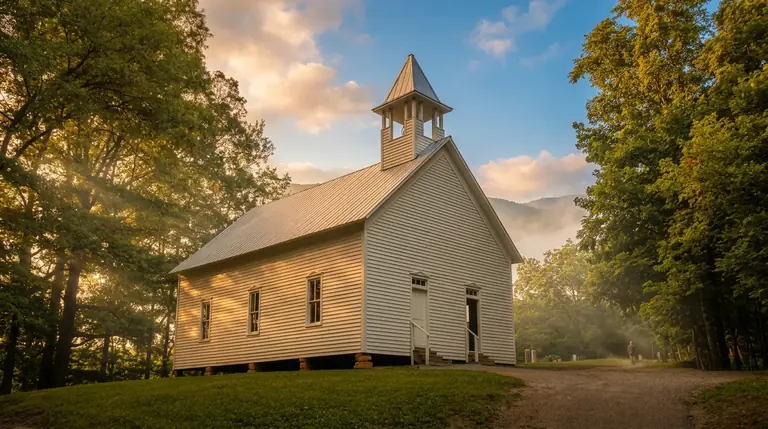
By the time you reach the Carter Shields Cabin, you have passed the mill, the churches and the big farmsteads. This is the small house at the end of the road, and it shows another side of the cove.
The man and the house
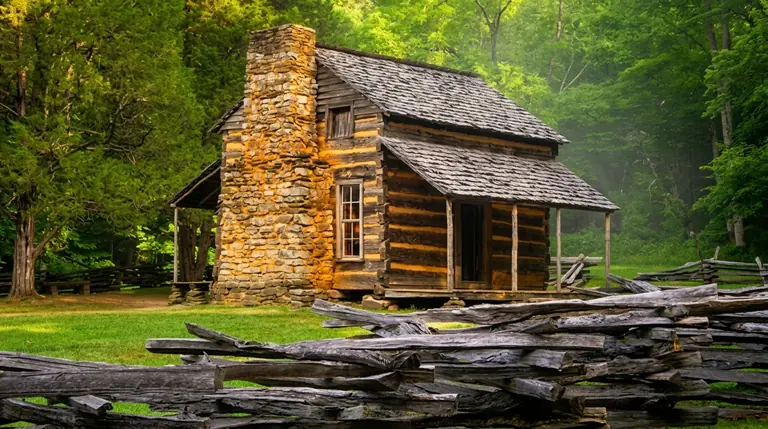
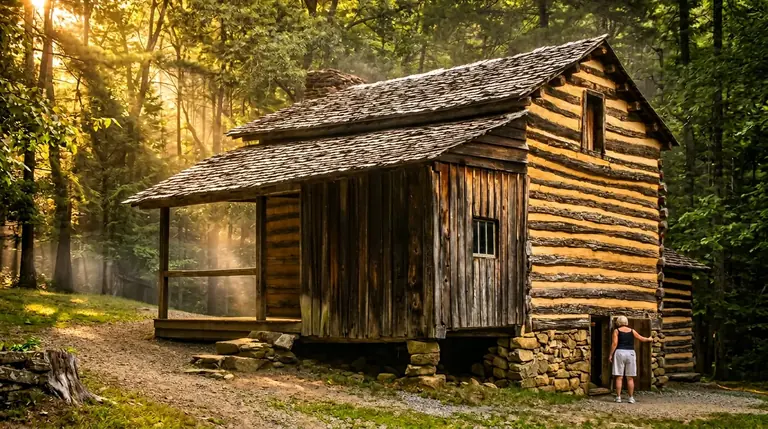
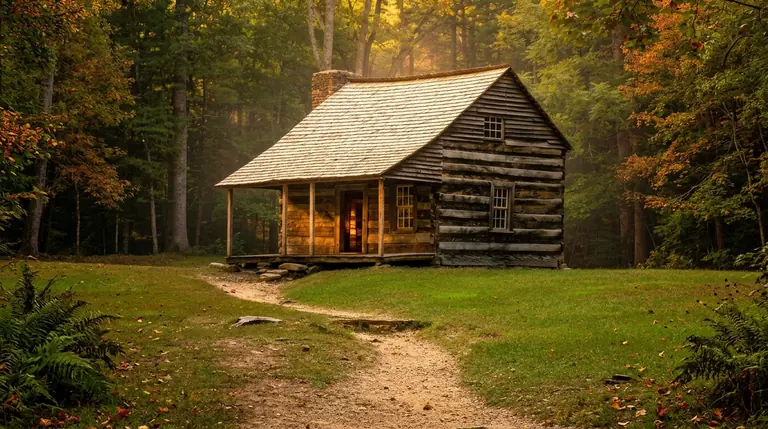
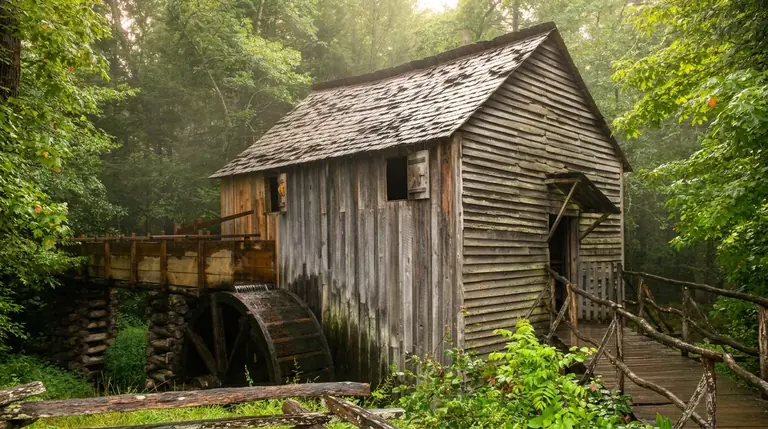
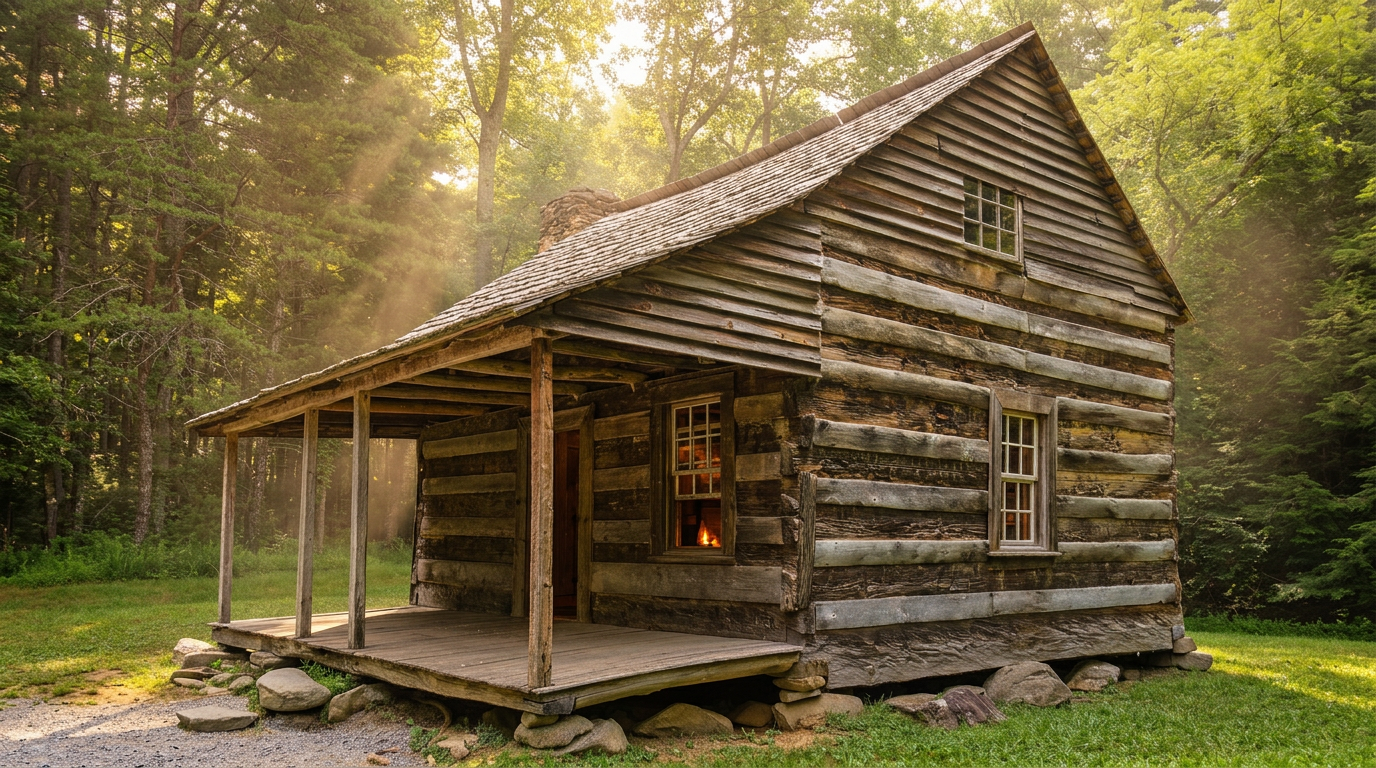
Carter Shields was a Civil War veteran who farmed in the cove into the early twentieth century. His log house is smaller and plainer than the Oliver or Tipton homes, which makes it a useful comparison. The cove's families were not equal in wealth. The Cables had a mill and a frame house; the Shields place was a small farm with a small cabin, and the difference is visible in the number of rooms and the size of the porch. You can walk up to the cabin and look in.
Visiting
- Where: at the far end of the loop, after the Tipton Place and before the road swings back toward the exit.
- Time to allow: 10 to 15 minutes.
- Parking: a short pull-off; a parking tag is required for stops over 15 minutes.
- Hours: open sunrise to sunset; closed to cars on Wednesdays from May 6 to September 30, 2026.
- Facilities: none. Restrooms are at Cable Mill.
Light and wildlife
Late afternoon is the best time, when the sun comes low across the field and warms the logs. Deer graze in the fields behind the cabin in the evening, and wild turkeys cross the road. Black bears use this edge too, so keep 50 yards away and stay near your car.
Context
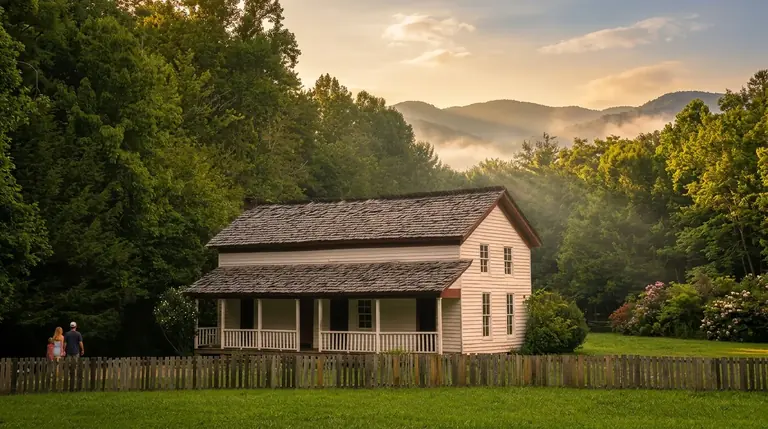
Compare this with the Becky Cable House, a frame home, and the John Oliver Cabin, the oldest in the cove. Together they show a century of cove building. Allow two to four hours for the whole loop in fall.
Good to know
- Do I need a parking tag?
- A Park It Forward parking tag ($5 a day, $15 a week or $40 a year) is required for any vehicle parked more than 15 minutes inside Great Smoky Mountains National Park. Entry is free, and federal passes such as America the Beautiful do not replace the tag.