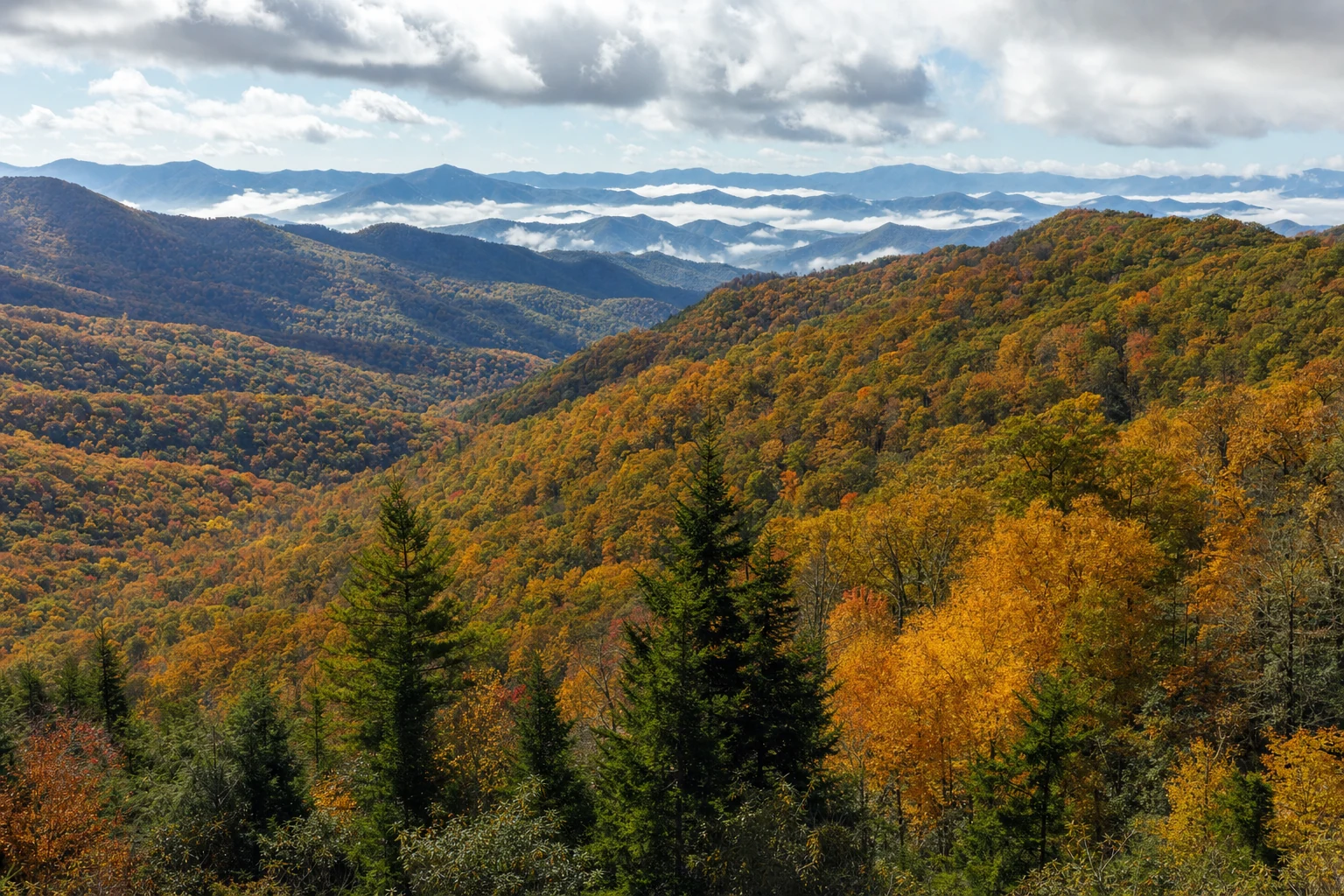

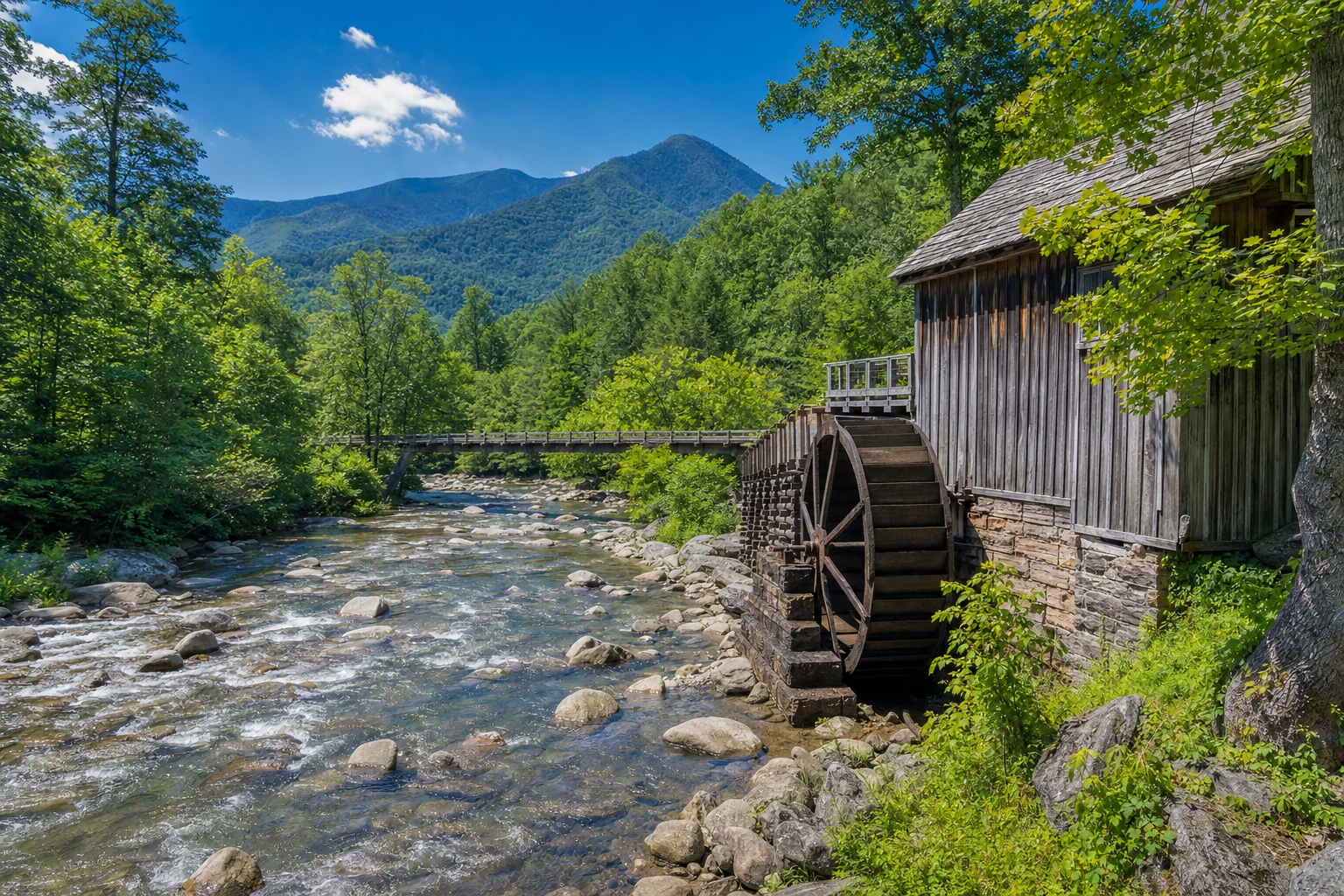
Summer is the Smokies' busiest season: June through August fill the gateway towns, trailhead lots are full by 9 a.m., and weekend lines at Dollywood can stretch to two hours. The payoff is the whole park in full swing, with cold swimming holes, rafting, flame azaleas on the balds, elk calves, fireflies, high-elevation trails free of ice, and 14 to 15 hours of daylight. This guide covers what 2026 looked like and what to plan for summer 2027.
The simple strategy: start at dawn, swim in the afternoon, and be off the ridges before the storms. Mornings are for hiking, midday for water, and evenings for the Parkway.
What happens in the Smokies in June?
The transition month. The synchronous fireflies at Elkmont light up for about eight nights from late May into June, by lottery only (the 2026 viewing week was May 20 to 27; see the fireflies guide). Flame azaleas peak on Gregory Bald in mid-to-late June, mountain laurel blooms at mid elevations, and evenings stay in the 60s. It is the best month for mid-elevation hiking: bugs are light, blooms are active, and Kuwohi Road is dry and open.
What's on: elk calving in Cataloochee and Oconaluftee, Gregory Bald azaleas, Dollywood's Smoky Mountain Summer Celebration (June 26 to August 8 in 2027), and A Mountain Quiltfest at the LeConte Center (June 7 to 10, 2027).
What happens in July?
The hottest month and the busiest. Valleys reach the high 80s with high humidity, while Newfound Gap and higher elevations stay in the 60s and 70s. Afternoon thunderstorms are nearly daily, so hike in the morning and be off ridges by 2 p.m. Swimming holes at Elkmont, Deep Creek and Abrams Creek are packed, and the water (50s to 60s) feels glorious.
What's on: Gatlinburg's Fourth of July Midnight Parade (it steps off at 12:01 a.m. on July 4 and bills itself as the first Independence Day parade in the nation), the Pigeon Forge Patriot Festival, the Gatlinburg drone show and fireworks, the Cherokee Fourth of July Powwow, Smoky Mountain Tunes and Tales along the Gatlinburg Parkway, and the Gatlinburg Craftsmen's Fair in mid-July. Outfitters run full schedules for tubing and rafting. See the events calendar for exact dates.
What happens in August?
Still hot, but crowds soften by mid-month as schools reopen. Humidity eases by late August, thunderstorms stay common, and the natural haze that gives the Smokies their name is at its most visible. Townsend hosts a hot air balloon festival planned for August 2027, and Unto These Hills in Cherokee runs through the third week of August (the 2026 season ended August 22).
Where can you swim and play in the water?
Swimming holes: the Little River through Elkmont, Midnight Hole on Big Creek, Abrams Creek near Cades Cove, and Deep Creek above Bryson City. Water temperatures run roughly 55 to 70 degrees. Algae-coated rocks are slippery, so wear shoes. Never swim near waterfalls or at The Sinks, where drownings have occurred.
Tubing: Little River outfitters in Townsend rent tubes by the day. Deep Creek has tube rentals near the park entrance in Bryson City.
Whitewater rafting: the Nantahala Gorge (Class II-III, family-friendly) out of Bryson City and the Nantahala Outdoor Center, and the Pigeon River (Class III-IV). Book ahead for July weekends. See the Nantahala rafting guide.
Fishing: the Little River, Abrams Creek and the Oconaluftee are all prime trout streams. See the fly-fishing guide.
Which high-elevation hikes are best in summer?
Summer's big advantage is trail access without ice.
- Alum Cave to Mt. LeConte (about 11 miles round trip, strenuous): summit at 6,593 feet; LeConte Lodge books up a year ahead. The Bullhead Trail has seasonal closures, so check the NPS closures page.
- Charlies Bunion (8 miles round trip from Newfound Gap, moderate to strenuous): an Appalachian Trail walk to a dramatic outcrop.
- Kuwohi (about 1 mile round trip from the parking lot, steep paved path): a 360-degree tower at the park's highest point.
- Gregory Bald (about 11 miles round trip, strenuous): the famous June azalea display.
- Mt. Cammerer (about 11 miles round trip from Cosby, strenuous): a historic stone fire tower. Check trail status first.
Every trailhead lot requires the parking tag if you stay over 15 minutes ($5 daily, $15 weekly, $40 annual, physically displayed; federal passes are not accepted). Laurel Falls Trail is closed until 2027; Grotto Falls and Abrams Falls are good waterfall alternatives. See the hiking guide.
Which attractions work well in summer?
- Dollywood and Splash Country: buy tickets in advance, arrive at opening, and note that lines double by 11 a.m. Dollywood's new NightFlight Expedition opened in August 2026.
- The Island in Pigeon Forge: the Ferris wheel gives views over the Parkway on clear afternoons.
- Ripley's Aquarium of the Smokies: air-conditioned and ideal for a rainy afternoon.
- Tuckaleechee Caverns: about 58 degrees year-round.
- Anakeesta: the new Crystal Express glass gondola opened in May 2026.
- Gatlinburg SkyBridge and SkyLift Park: aerial views from 500 feet.
See the family guide and attractions for more.
How do you beat the heat?
- Start hiking at dawn; by 10 a.m. the valleys are hot.
- Go higher. Kuwohi and Mt. LeConte are about 15 degrees cooler than Gatlinburg.
- Swim in the middle of the day while everyone else is stuck on the road.
- Skip the Gatlinburg Parkway walk in 90-degree heat and save it for evening. The Gatlinburg trolley is free, and Pigeon Forge's Fun Time Trolley is $1 a ride.
How should you handle summer thunderstorms?
Afternoon storms are routine: clear mornings, building clouds by noon, heavy rain and lightning between 2 and 6 p.m., clearing by evening. If you are on a bald, a ridge or a fire tower and you hear thunder, descend now. Never shelter under a lone tall tree. Crouch in a low area and spread out from your group.
What should you skip on summer weekends?
- Cades Cove on a Saturday afternoon in July: the 11-mile loop can take three hours or more. Go at dawn, or on a Wednesday when the loop is vehicle-free (early May to late September, all day). See the Cades Cove guide.
- The Kuwohi parking lot after 10 a.m.: it fills up. Try dawn or late afternoon.
- The Parkway on weekend evenings: bumper-to-bumper. Eat off the Parkway.