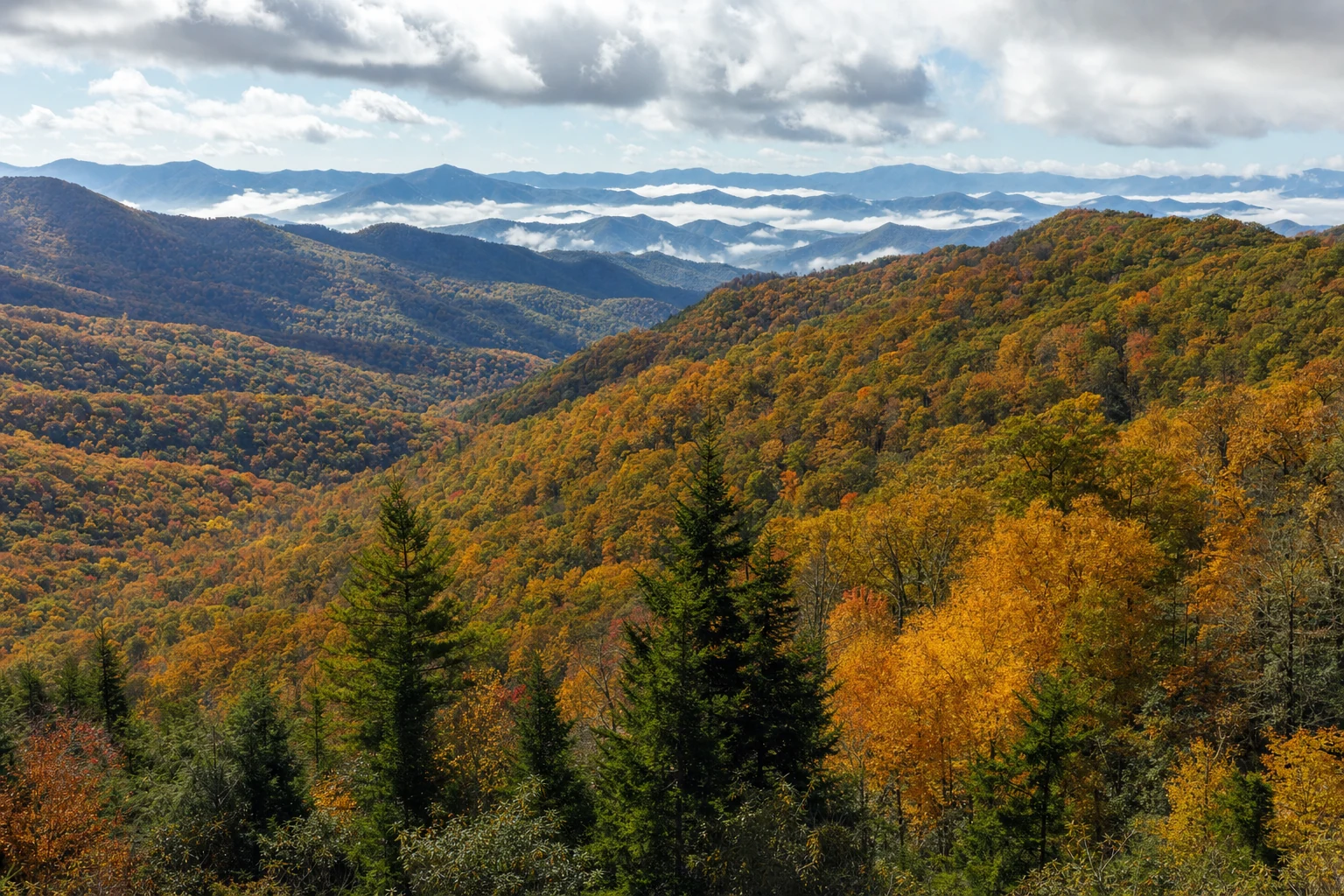

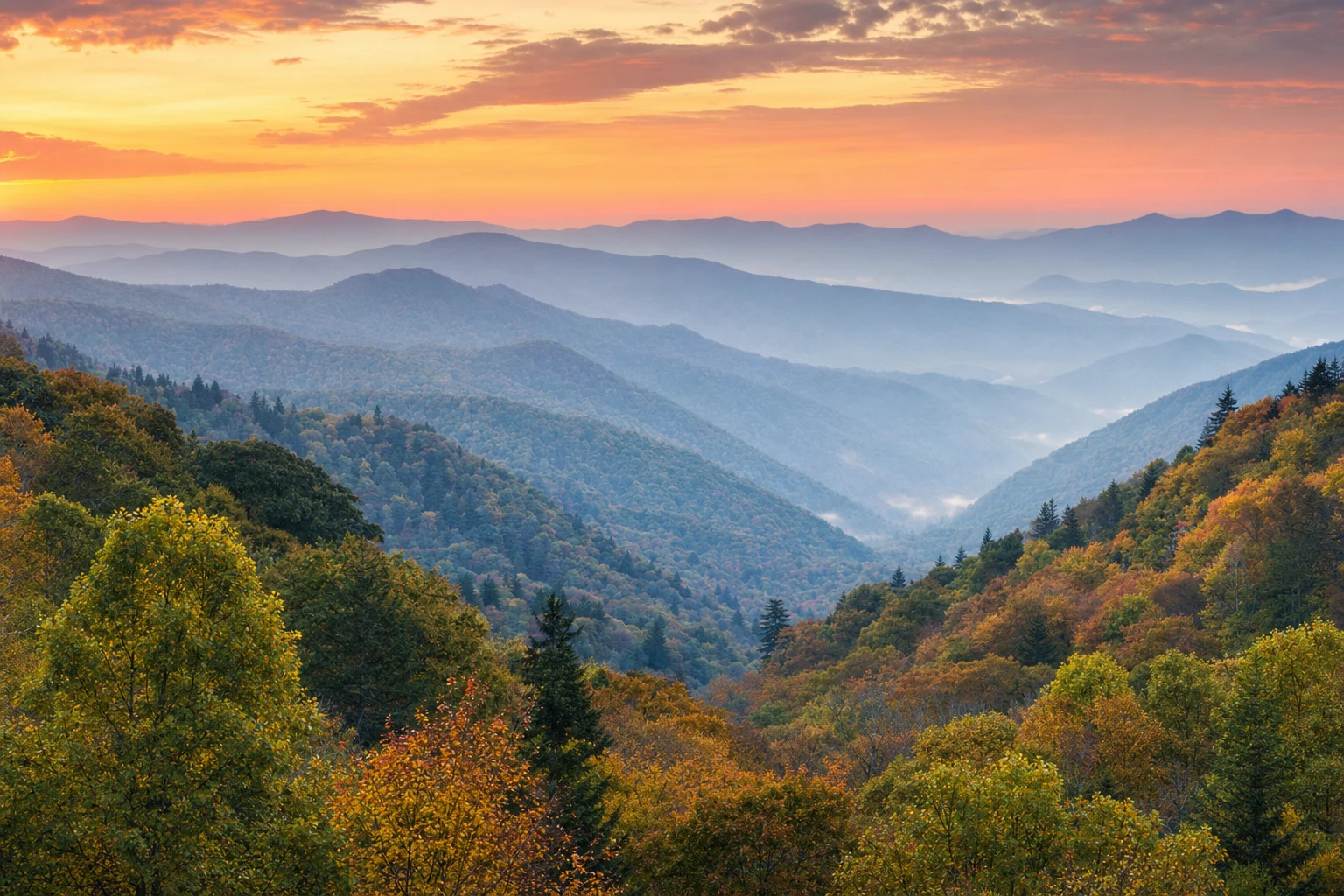
The best months to photograph the Smokies are April for wildflowers, mid-June for flame azaleas, late September for the elk rut, October for fall color, and any clear cold morning from October to January for cloud inversions. Go to the right elevation at first light, bring a tripod, and carry a long lens for wildlife you must keep 50 yards away from.
The park's subjects are dense and varied: layered ridgelines, old-growth forests, dozens of waterfalls, black bears, about 200 reintroduced elk, more than 1,500 flowering plant species, 250-plus bird species and hundreds of preserved historic structures. Here is a month-by-month playbook for when and where to aim your camera, updated for 2026-27.
January
Subject: rime ice, leafless ridges, cloud inversions, winter wildlife Where: Newfound Gap, Kuwohi observation tower, Cades Cove at dawn, Foothills Parkway Look Rock Conditions: Cold, clear mornings are the gift, with temperatures around 25°F at dawn at Newfound Gap. Rime ice on high-elevation trees common after storm cycles. Gear note: battery drain at cold temps; keep spares warm in inside pocket.
February
Subject: early spring wildflowers (hepatica, trout lily), lingering ice on waterfalls, winter wildlife still Where: Cades Cove, Greenbrier area, Porters Creek lower sections Conditions: Variable, because late winter and early spring overlap.
March
Subject: wildflower beginnings, bare-tree wildlife (bears waking, deer active), dogwood buds Where: Cove Hardwood Self-Guiding Trail, Porters Creek, Cataloochee Valley Conditions: Mud season begins. Many dirt roads rough.
April
Subject: PEAK WILDFLOWERS (mid-to-late April), spring wildflower pilgrimage, warbler migration Where: Porters Creek, Cove Hardwood, Chestnut Top, any old homestead clearing Conditions: Overcast days yield best wildflower saturation. Rain likely; embrace it. Gear note: macro lens for details, lens hood for drizzle.
May
Subject: full leaf-out, mountain laurel, rhododendron beginnings, full waterfalls Where: Rainbow Falls, Ramsey Cascades, Grotto Falls, Mingo Falls (Laurel Falls Trail is closed until 2027) Conditions: Thunderstorm potential rising. Water levels strong from snowmelt.
June
Subject: synchronous fireflies (Elkmont, late May to early June, lottery required; see the fireflies guide), flame azaleas on Gregory Bald, early summer greens Where: Elkmont (with lottery pass), Gregory Bald (strenuous hike), Balsam Mountain Conditions: Long shooting days, with sun up by 6 a.m. and down after 9 p.m.
July
Subject: afternoon thunderstorms, high-humidity "smoke," lightning (carefully), wildlife at dawn/dusk Where: Newfound Gap, Kuwohi, Mount LeConte summit, any elevation above 4,500 ft Conditions: Hot and humid in valleys. Mid-day light harsh. Plan dawn/dusk only for best light.
August
Subject: peak Smokies "smoke," thunderstorms, salamander breeding, late wildflowers Where: Morton Overlook, Foothills Parkway, Kuwohi tower Conditions: Heaviest haze of the year. Visibility can be dramatic or obscured.
September
Subject: ELK RUT (mid-to-late month), first high-elevation color, early foliage in upper Blue Ridge Parkway Where: Cataloochee Valley (bulk of rut action), Oconaluftee, Kuwohi area Conditions: Cooler mornings. Some valley mist. Gear note: 500mm lens minimum for elk. Tripod for low dawn light.
October
Subject: PEAK FALL FOLIAGE (see the fall foliage guide), cloud inversions increase Where: Newfound Gap Road, Foothills Parkway, Blue Ridge Parkway MP 411–469, Cades Cove late in the month Conditions: The biggest month. Traffic heavy. Arrive before 8 AM at every popular spot.
November
Subject: late valley foliage, cloud inversions peak, first ice on waterfalls at month's end Where: Cades Cove (late peak), Little River Road, Morton Overlook Conditions: Frost frequent. Short days mean golden hour hits 4:30 PM.
December
Subject: ice, snow (if we get it), low winter light, Christmas lights in Gatlinburg Where: Downtown Gatlinburg for Winter Magic lights (November 5, 2026 to February 15, 2027), Newfound Gap after any snow event Conditions: Roads close intermittently for ice. Short days.
The classic shots
Layered ridges: Morton Overlook, Newfound Gap, Foothills Parkway Look Rock. Use telephoto (200-400mm) to compress the layers. Dawn or dusk light is everything.
Cloud inversions: Kuwohi at sunrise, Newfound Gap at sunrise, Waterrock Knob (BRP MP 451). Drive up in the dark; shoot the first 30 minutes of light.
Waterfalls: Rainbow Falls, Ramsey Cascades, Grotto Falls (shot from behind the curtain), Mingo Falls, Linville Falls. Use 1/2–2 second exposure for silky water; ND filter helpful on sunny days.
Wildlife: Elk at Cataloochee dawn/dusk (fall rut), bears in Cades Cove dawn/dusk, deer everywhere. Always 300mm minimum, 500mm+ preferred.
Historic structures: Cades Cove cabins and churches (dawn low light, fence shadow lines), Cataloochee Palmer Chapel, Mountain Farm Museum buildings. Wide-angle (16–35mm) for interiors; 50mm for exteriors.
Cades Cove fog: Early-morning fog and mist in the valley floor make the classic "Smoky" shots. Best October-January.
Gear considerations
- Tripod: essential for cloud inversions, waterfalls, low-light forest, long-exposure fall color
- Filters: polarizer (reduces glare on wet rocks and water); ND for long exposures; graduated ND for high-contrast sunrise/sunset
- Lenses: 16–35mm for interiors and night sky, 24–70mm walk-around, 70–200mm for most scenics, 200–500mm for wildlife
- Rain gear: the Smokies are wet. Bring lens cloths, rain cover for camera, dry bag for pack
- Drones: prohibited in the park. Do not bring one for aerial photography in GSMNP
Low-impact ethics
- Stay on marked trails. Off-trail scrambling for the "better angle" kills wildflowers and erodes fragile hillsides
- Maintain legal wildlife distance at all times
- Never bait wildlife with food or calls
- No tripods in the middle of overlook pullouts; stay to the side and share the view
- Leave found objects (antlers, feathers, artifacts) where you found them