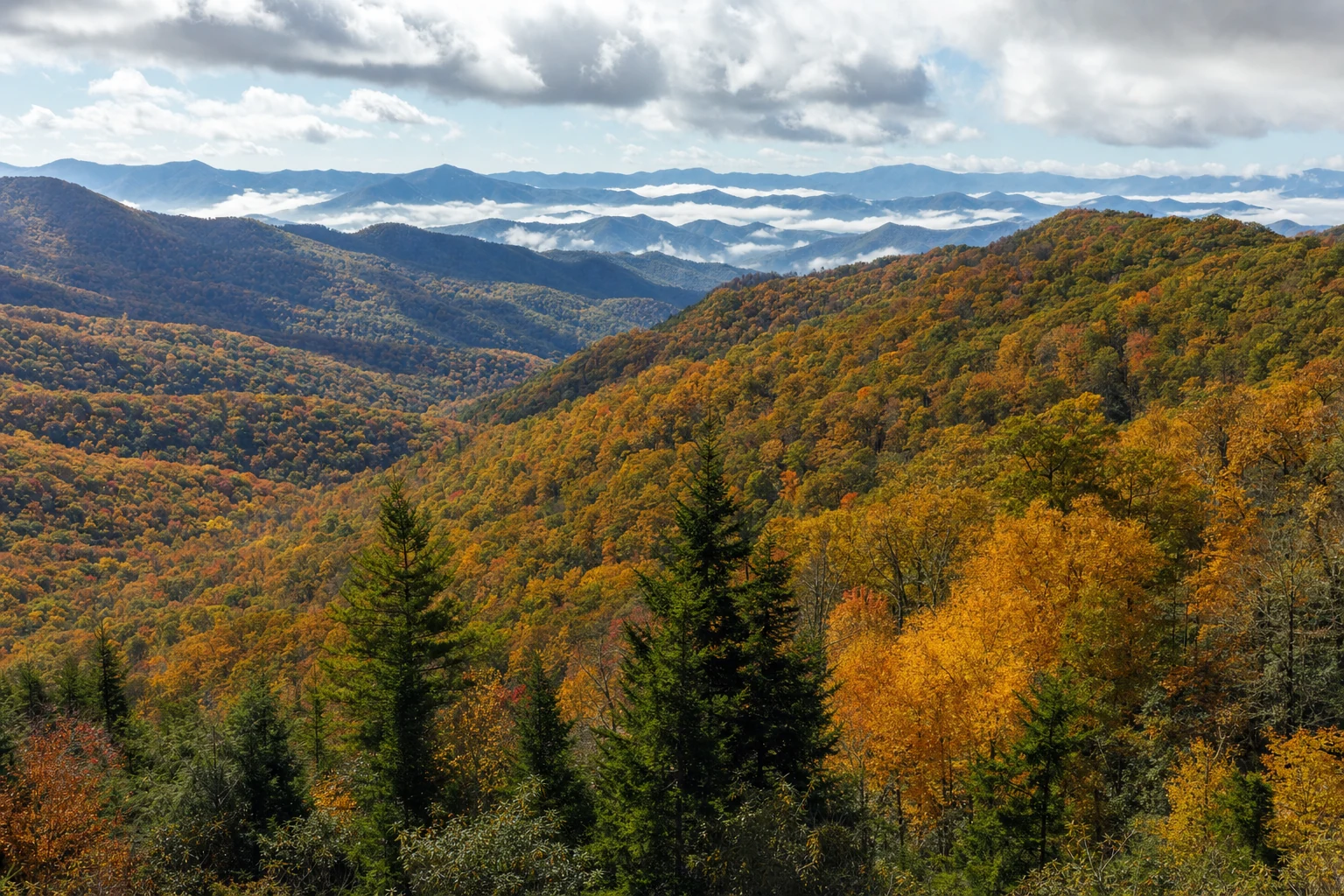

The most accessible places in the Smokies are the paved Gatlinburg Trail and Oconaluftee River Trail, the Sugarlands and Oconaluftee visitor centers, Newfound Gap Overlook, and the Cades Cove Loop Road, which you can enjoy from a car. Service dogs are welcome everywhere visitors can go. For anything specific to your situation, call the park at 865-436-1200.
The park and the gateway towns have steadily improved access over the past decade, and several major attractions meet high accessibility standards. This page lays out what works for visitors with mobility challenges, vision or hearing impairments, or sensory sensitivities, and what remains difficult. Details change, so confirm with each site before you go.
Which trails and sites are wheelchair accessible?
Accessible trails (paved, ADA-compliant grades):
- Gatlinburg Trail (3.8 mi out-and-back, paved, minimal grade), running from Sugarlands Visitor Center to downtown Gatlinburg. Dogs permitted. It is widely regarded as the best accessible trail in the park.
- Oconaluftee River Trail (3 mi out-and-back, paved, minimal grade), running from Oconaluftee Visitor Center south toward Cherokee. Dogs permitted.
- Sugarlands Visitor Center nature trails (short paved loops)
- Cove Hardwood Self-Guiding Trail (0.75 mi loop, paved, some moderate grades)
- Mountain Farm Museum grounds (flat gravel paths; several buildings enterable)
Accessible viewpoints (car-accessible, paved parking):
- Newfound Gap Overlook (5,046 ft, paved ramp to viewing area)
- Kuwohi parking lot (formerly Clingmans Dome): the half-mile path to the observation tower is paved but steep, with grades of 12 percent or more in sections. It is not ADA compliant, but some wheelchair users manage with assistance. The road is open April 1 to November 29 in 2026
- Cades Cove Loop Road : the full 11-mile loop is drivable with pullouts at key stops. Several historic buildings (Cable Mill, Primitive Baptist Church) have accessible entry
- Morton Overlook and Oconaluftee Valley Overlook: accessible viewing from paved pullouts (Carlos Campbell Overlook is temporarily closed)
- Foothills Parkway Look Rock: check current conditions with the Park Service before you go
Accessible historic sites:
- Cades Cove Cable Mill area: paved paths, some gravel
- Palmer Chapel at Cataloochee: accessible from the parking area
- Sugarlands Visitor Center: accessible
- Oconaluftee Visitor Center and Mountain Farm Museum: accessible visitor center; the farm museum grounds are flat gravel paths
Frontcountry campgrounds with accessible sites:
- Cades Cove and Smokemont (both open year-round)
- Elkmont and Cosby (seasonal)
- Deep Creek (limited)
Reserve accessible campsites on recreation.gov and call the park to confirm which sites best match your needs.
How accessible are the gateway towns?
Dollywood: offers wheelchair rentals and accessible boarding on many rides, and its website has a detailed accessibility guide. Review it before you visit, especially for new rides such as NightFlight Expedition (opened August 2026).
Trolleys: Pigeon Forge's Fun Time Trolley costs $1 a ride, and Gatlinburg's trolley is free. Ask each system about wheelchair-accessible vehicles.
Anakeesta: the new Crystal Express glass gondola opened in May 2026. Contact Anakeesta about accessibility at the top, since not every feature is accessible.
Ober Gatlinburg: contact the resort about tram and summit accessibility.
SkyLift Park: contact the park about chairlift boarding and SkyBridge access.
Ripley's Aquarium of the Smokies: wheelchair accessible, with rentals available.
What is available for visitors with vision impairment?
- Audio and tactile options: ask at the visitor centers about audio guides and exhibits, and check major attractions for audio programs
- Service dogs: welcome everywhere visitors can go, including park trails
- Low-vision navigation: well-contrasted sidewalks and pathways in Gatlinburg and Pigeon Forge; park trailheads typically have large interpretive signs
What is available for visitors with hearing impairment?
- ASL interpretation: contact the park well in advance to ask about ranger programs
- Captioning: ask at visitor centers about captioned films
- Lodging: most hotels offer closed captioning, and cabin rentals vary, so confirm with your property
- Dollywood: check its accessibility guide for interpreted shows
What helps with sensory sensitivities?
- Quiet-hour visits: arrive at popular sites before 9 AM for dramatically quieter experiences
- Less-crowded alternatives: Cosby Campground area, Cataloochee Valley, Wears Valley, Cherokee Oconaluftee all see a fraction of the Gatlinburg crowd
- Indoor refuges: Ripley's Aquarium (cool, dark), Tuckaleechee Caverns (58°F, quiet), Tennessee Museum of Aviation, Sugarlands Visitor Center theater
- Theme parks: ask Dollywood and other attractions about quiet spaces and sensory guides before you go
- Routine-friendly lodging: a multi-room cabin or B&B beats a Parkway hotel for quiet and predictability
What about dietary restrictions?
Most Smokies restaurants accommodate common dietary needs, but the more specialized the restriction, the more planning helps. Gatlinburg and Pigeon Forge have gluten-free, vegetarian and vegan options, and Cherokee has fewer. Groceries in a cabin are the most flexible approach. See the restaurant guide.
What medical considerations should you know?
- Altitude: Newfound Gap (5,046 feet) and Kuwohi (6,643 feet) are high enough to affect some people. If you have altitude-sensitive conditions, acclimate gradually
- Pharmacies: open in all major gateway towns; weekend/overnight hours limited in smaller towns
- Urgent care: Sevier County has multiple urgent-care clinics; Sevier County Medical Center in Sevierville and Blount Memorial in Maryville are full-service
- Emergency: 911 throughout the region; for non-emergency park questions, 865-436-1200
Are service animals allowed in the park?
Service dogs, meaning dogs individually trained to perform a task for a person with a disability, may go anywhere visitors can go, according to the Park Service pet page. Emotional support, therapy and companion animals, and service animals in training, are treated as pets under park rules, so they are not allowed on trails other than the Gatlinburg Trail and Oconaluftee River Trail. See the pets guide.
Where can you get further help?
- Park information: call 865-436-1200 to ask about accessibility
- Individual attraction accessibility: check each attraction's website; most have a dedicated accessibility page
Access keeps improving, and contacting a site ahead of time is the most reliable way to get a specific answer. Check the NPS closures page for trail and road changes.