
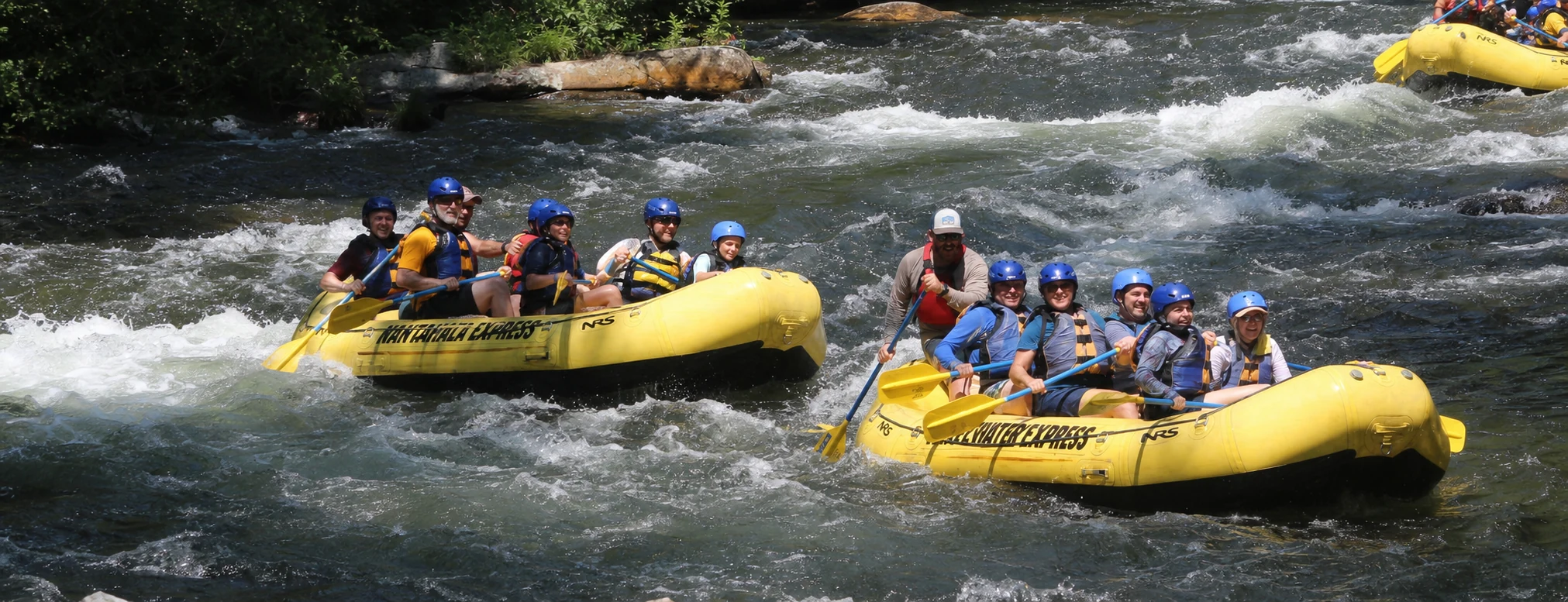
The Nantahala River's commercial rafting run is about 8 miles of mostly Class II water through a steep forested gorge in Western North Carolina, with a Class III finish at Nantahala Falls. It is under two hours from Gatlinburg and an easy drive from Cherokee or Bryson City. The water is cold, around 50 degrees even in August, and released on a dam schedule, so outfitters run trips daily from spring through October. Book ahead for summer weekends and wear a wetsuit in the shoulder seasons.
Plan on about three hours on the water and four to five hours total, from check-in to dry clothes. It is the most family-friendly whitewater in the region.
Why is the Nantahala so cold, and always running?
The Nantahala does not rise and fall with the weather. Its flow is controlled by Duke Energy's hydroelectric operations, which release cold water from the depths of the system on a daily schedule. That produces rapids at nearly the same level every trip, which is why outfitters can sell fixed departure times all season.
The same arrangement gives the river its signature trait: the water stays at roughly 50 degrees year-round, even on a 90-degree afternoon. Prolonged contact with water that cold causes quick heat loss, and an unplanned swim can feel miserable within minutes. Outfitters recommend or require wetsuits and splash jackets and rent them. Skip cotton, which stays wet and cold, and wear synthetic or wool layers and strapped water shoes. Flip-flops are a mistake.
What are the rapids on the commercial run?
The commercial section runs from just below the powerhouse release area to the Nantahala Outdoor Center (NOC), which doubles as the main take-out. The run is mostly lively Class II wave trains with quiet pools between them.
- Patton's Run: an early rapid that introduces the river and lets guides practice paddle commands with your crew.
- Lesser Wesser: a staircase of waves and short drops later in the run that keeps you busy without being technical.
- Nantahala Falls: the finale, rated Class III, just above the NOC take-out. It is a real drop with powerful hydraulics that needs good teamwork. Spectators gather on the railroad bridge and the NOC deck to watch rafts run it.
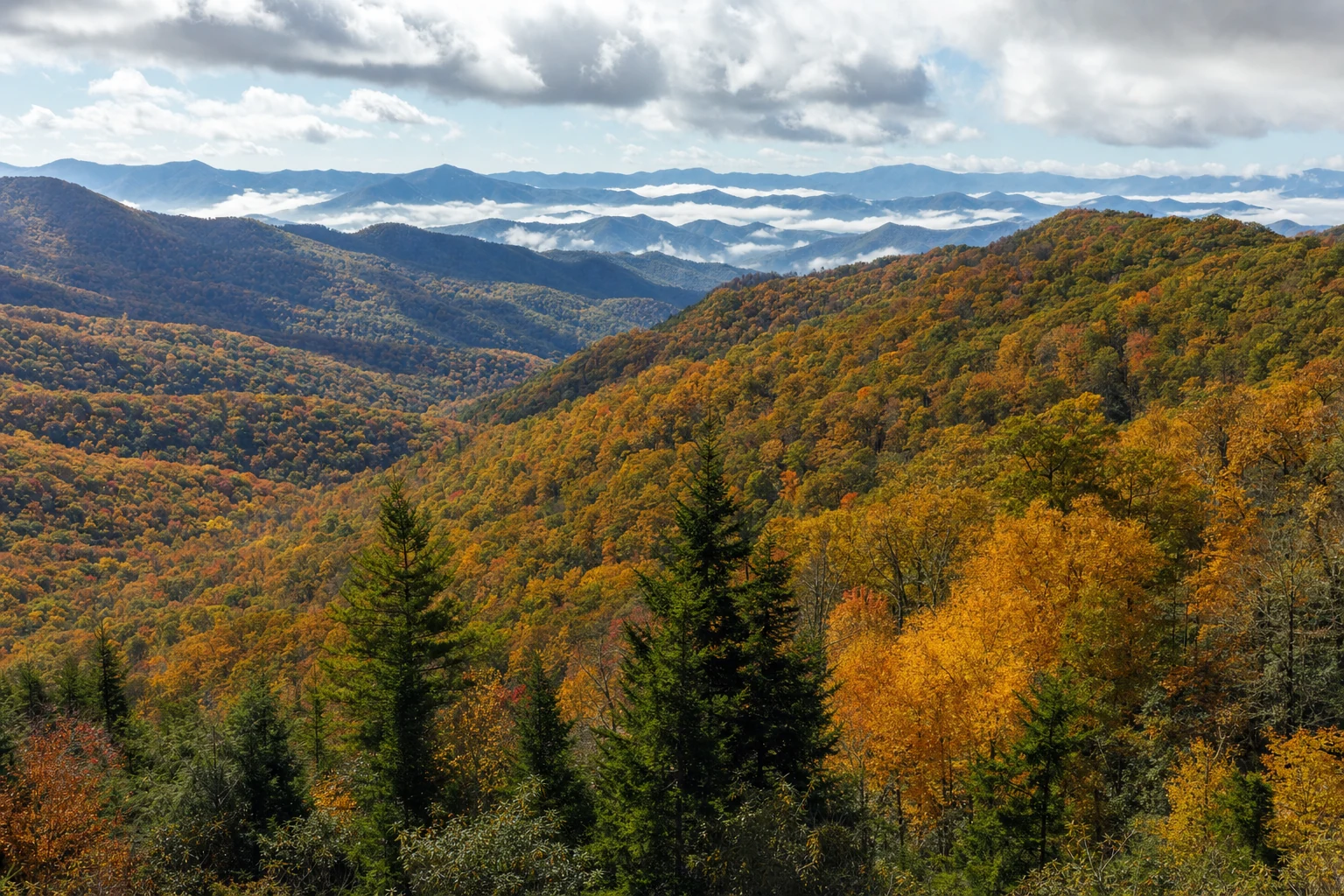
The gorge itself is half the experience. Steep slopes of the Nantahala National Forest rise on both sides, the canopy keeps the air cool, and the light through the leaves gives the canyon a rainforest feel.
When is rafting season on the Nantahala?
Commercial rafting generally runs from April through October, though the exact dates are set by each outfitter. Confirm your trip date before you book, especially late in October.
- Spring (April and May): cooler air, fewer people and fresh green leaves. Wetsuits are essential.
- Summer (June to August): peak season, with the warmest air and the biggest crowds. Weekend reservations are essential, and the cold water feels good when the air is in the 90s.
- Fall (September and October): a favorite with experienced rafters, with thinner crowds and good color through mid-October. Wetsuits are strongly recommended. Schedules thin out in late October.
Which outfitters run the Nantahala?
Several established outfitters guide trips and rent inflatable kayaks on the commercial section. All provide helmets, life jackets, a safety briefing and a shuttle from base camp to the put-in. Operating dates, prices and available extras change from year to year, so check each outfitter's site for 2026 details.
- Nantahala Outdoor Center (NOC): 13077 US-19, Bryson City. The largest operation on the river, built around the take-out. Guided rafts and inflatable kayaks, a restaurant with a view of Nantahala Falls, a big retail store, lodging and non-rafting activities such as ziplining, ropes courses and biking. A good fit for families who want a full day in one place.
- Wildwater Nantahala: a long-established outfitter known for family-friendly guiding, with guided trips, inflatable kayak rentals, ziplining and on-site lodging.
- Rolling Thunder River Company: a well-regarded outfitter with a smaller-group feel, guided trips and inflatable kayak rentals.
- Adventurous Fast Rivers Rafting: near NOC, known for competitive pricing and a no-frills focus on paddling.
- Carolina Outfitters: in Andrews, farther down US-19, with guided rafts, inflatable kayaks and on-site cabins.
- USA Raft Nantahala: part of a larger regional company with modern equipment and guided trips.
Reservations are strongly recommended everywhere and essential on summer weekends, holidays and peak fall color. Combo packages that bundle rafting with ziplining or biking at NOC and Wildwater can save money over booking each separately.
What are the age and weight limits for Nantahala rafting?
The Nantahala is the most family-friendly whitewater around, but outfitters enforce minimum ages and weights. A common standard is about 7 years old or 60 pounds for guided trips, and it varies by outfitter and trip type. Confirm with your outfitter before booking. A guided run takes about three hours on the water plus an hour for check-in, gear fitting, shuttle and safety briefing.
What should you wear and bring?
The Nantahala punishes anyone who underdresses.
- On the river: a swimsuit or quick-drying synthetic top and shorts (no cotton), water shoes with straps, sunglasses with a retainer strap, sunscreen and a hat. Rent a wetsuit and splash jacket from the outfitter; it is the biggest comfort choice in spring and fall.
- For afterward: a complete dry change, a towel and a sealable bag for wet gear.
- Optional: a waterproof camera or GoPro mounted securely, and a small dry bag.
Leave your wallet, phone and car keys in the car or with a non-paddler. Outfitters often have lockers at base camp, but anything in a raft gets wet.
Can you paddle the Nantahala on your own?
Every major outfitter rents inflatable kayaks, called "duckies" or "funyaks." You get the same briefing and shuttle as rafters, then paddle the commercial run yourself, usually alongside guided rafts. It is the most direct way to feel the river, and Nantahala Falls in a ducky is a real step up from the same drop in a raft. The Upper Nantahala runs at Class III to IV, is not offered by commercial outfitters and is for expert paddlers with their own gear and self-rescue skills.
What else is there to do near the gorge?
Lunch at the NOC's riverside restaurant, with a view of Nantahala Falls, is a classic way to end the day. The Tsali Recreation Area, a short drive away, has roughly 40 miles of mountain bike trails on four loops that alternate between bikes and horses. The Appalachian Trail passes near the gorge, and Fontana Lake is about 30 minutes west for fishing, houseboats and boat shuttles into the Smokies. Bryson City has a walkable downtown with breweries, shops and the Great Smoky Mountains Railroad depot.
How do you get to the Nantahala from the Smokies?
From Gatlinburg or Pigeon Forge, the drive takes 1.5 to 2 hours, usually on US-441 through the national park to Cherokee, then west on US-74/US-19. From Cherokee, figure about 45 minutes to the outfitters near Wesser. From Bryson City, 20 to 30 minutes. If you come from the east, I-40 through the Pigeon River Gorge is still one lane each way after Hurricane Helene, so allow extra time.
If your day includes any stop inside the national park, buy a parking tag ($5 daily, $15 weekly, $40 annual). Federal passes are not accepted. You do not need one for the Nantahala itself, which is in the Nantahala National Forest.