
History
Best Historic Sites in the Smokies
16 curated picks · updated
The best historic sites in the Smokies are the cabins, churches and mills of Cades Cove, the Mountain Farm Museum at Oconaluftee, Cable Mill and the Walker Sisters Place, a mile-and-a-half hike from Little Greenbrier. Cades Cove Loop Road is open sunrise to sunset, and car-free on Wednesdays from May to September. Mingus Mill is closed for now.
The Great Smoky Mountains wasn't empty forest when it became a national park in 1934. Roughly 6,000 people lived there, farming coves and ridges that their families had worked for generations. The park service acquired those lands through a mix of purchase and condemnation; most residents left. What's on this list is what remained: cabins, mills, churches, and farm outbuildings that the park has preserved as a record of that vanished way of life.
The 16 picks here fall into two main clusters. The Mountain Farm Museum near Oconaluftee assembled structures from various locations across the park onto a single working-farm footprint, so you can walk from the apple house to the blacksmith shop to the smokehouse in under an hour. Cades Cove, on the Tennessee side, keeps its buildings in their original locations along an 11-mile one-way loop road; each stop requires getting back in the car, but the structures still stand in the landscape they were built for, surrounded by open pasture that would be recognizable to someone who farmed here 150 years ago.
Walker Sisters Cabin stands apart from both clusters. The sisters refused to leave when the park formed and were granted life-rights to their land, staying until the last one died in 1964. Reaching the cabin complex takes a hike of roughly a mile and a half from the Little Greenbrier trailhead.
A few practical notes before you go:
- The parking tag is required for any vehicle parked more than 15 minutes in the park ($5 a day, $15 a week or $40 a year), sold at visitor centers, lot kiosks and recreation.gov. America the Beautiful and other federal passes are not accepted.
- Cades Cove loop road is closed to vehicles all day on Wednesdays from early May to late September (May 6 to September 30 in 2026) for cyclists and walkers. It is open sunrise to sunset on every other day.
- Mingus Mill, near Cherokee, is closed until further notice for preservation work, so Cable Mill is the mill to plan around.
- Fall weekends push the Cades Cove loop to three or four hours. Arriving before 9 a.m. cuts that significantly.
- The Mountain Farm Museum sites are flat and right beside the Oconaluftee Visitor Center parking area, no hiking required.
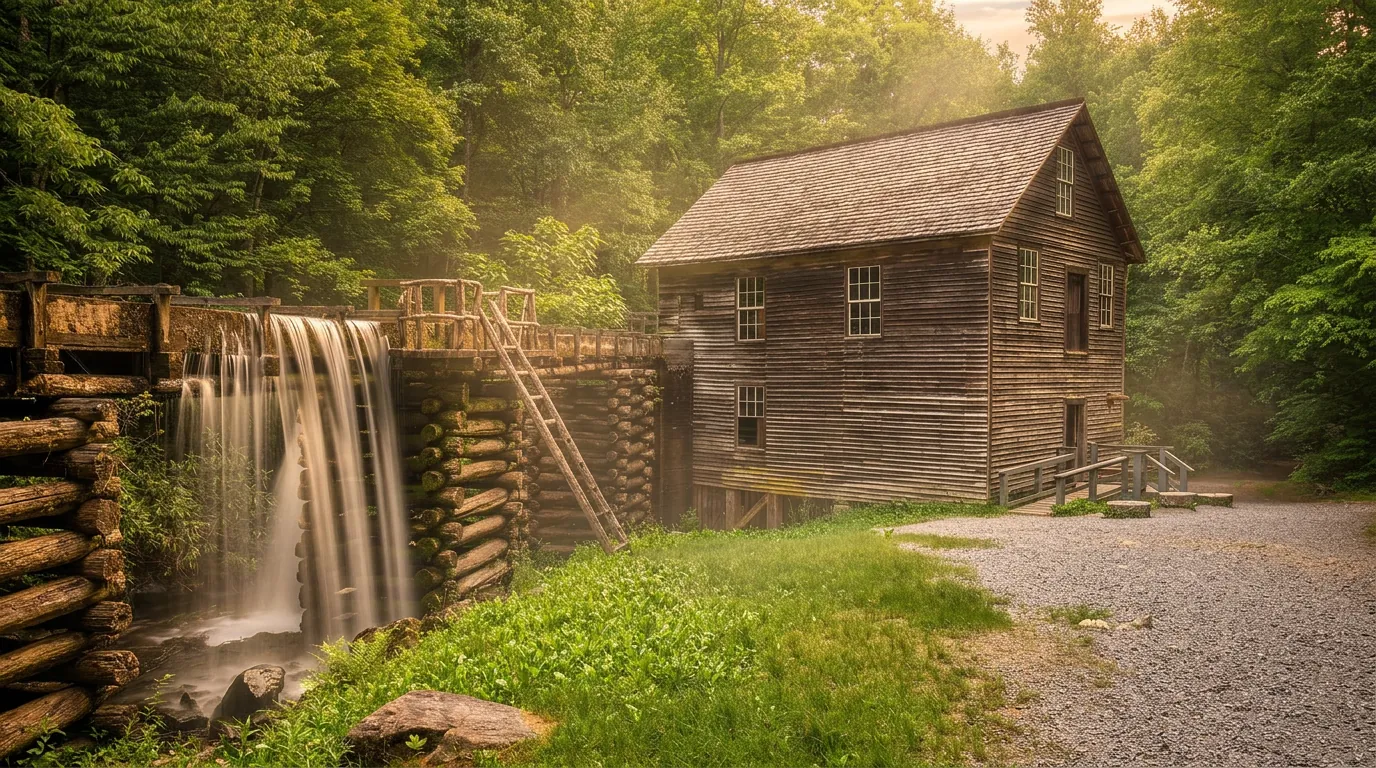
Cable Mill is the only working structure on this list. Park interpreters run grist mill demonstrations during the main visitor season, and the Cable Mill area is open daily from March 15 to November 29 in 2026, 9 a.m. to 5 p.m., which makes it worth timing your Cades Cove visit around.
More to plan with: the history hub, the Cades Cove guide, the Cataloochee guide, the elk-watching guide and the events calendar.
- 1
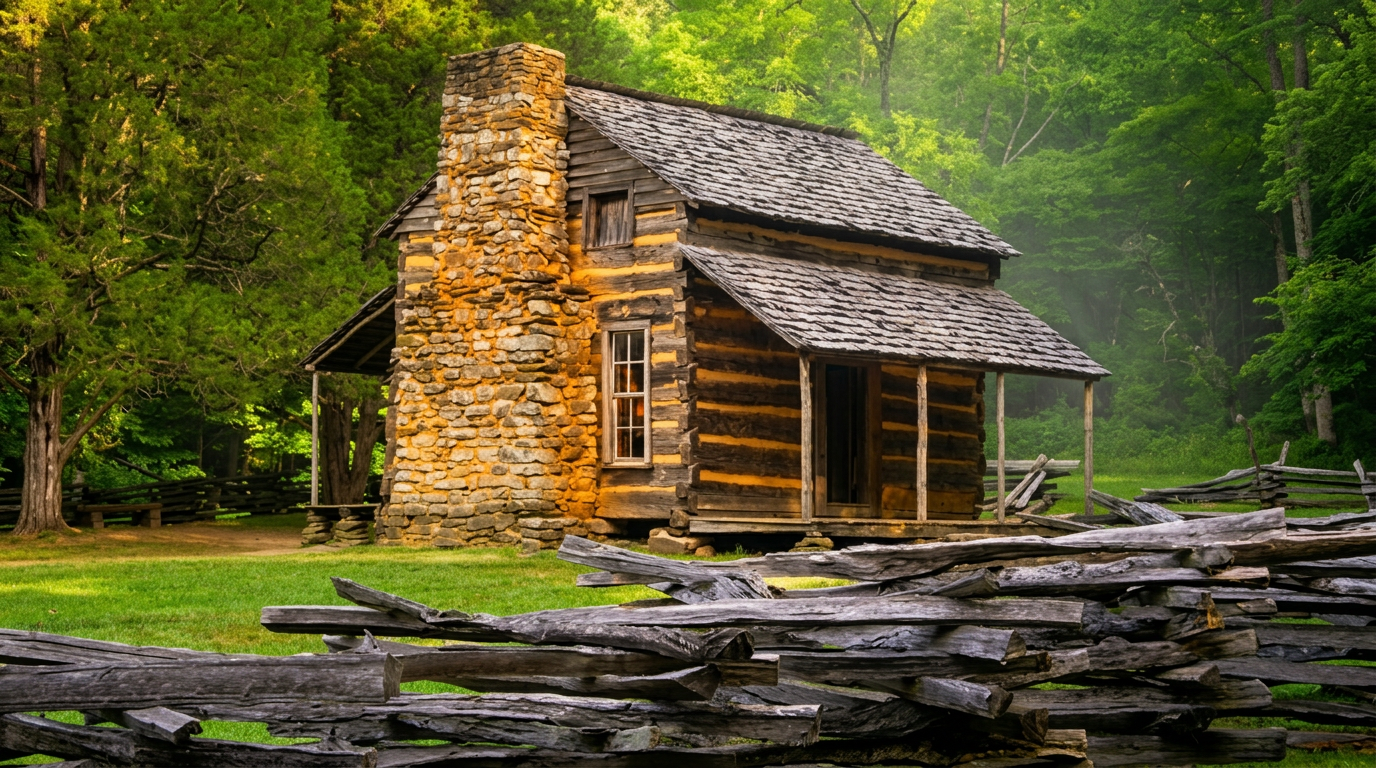
John Oliver Cabin
Cades Cove · built 1822
The John Oliver Cabin, the first stop on the Cades Cove Loop, is a log home from the early 1820s built by the cove's first permanent settlers, and you can walk inside.
-
 2
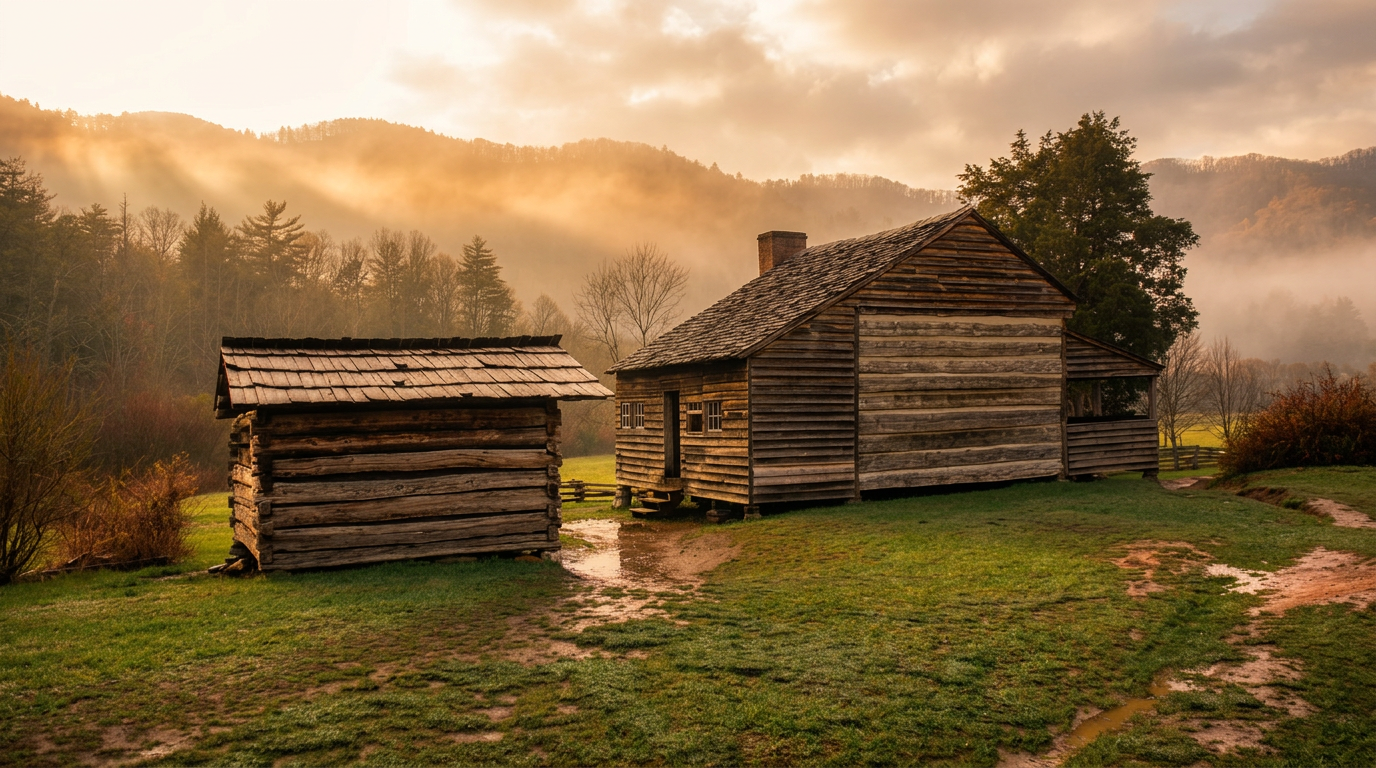
Dan Lawson Place
Cades Cove · built 1856
The Dan Lawson Place in Cades Cove is the farmstead of a blacksmith and cooper, with a house, smokehouse, corn crib and barn on the south side of the loop and a family cemetery nearby.
-
 3
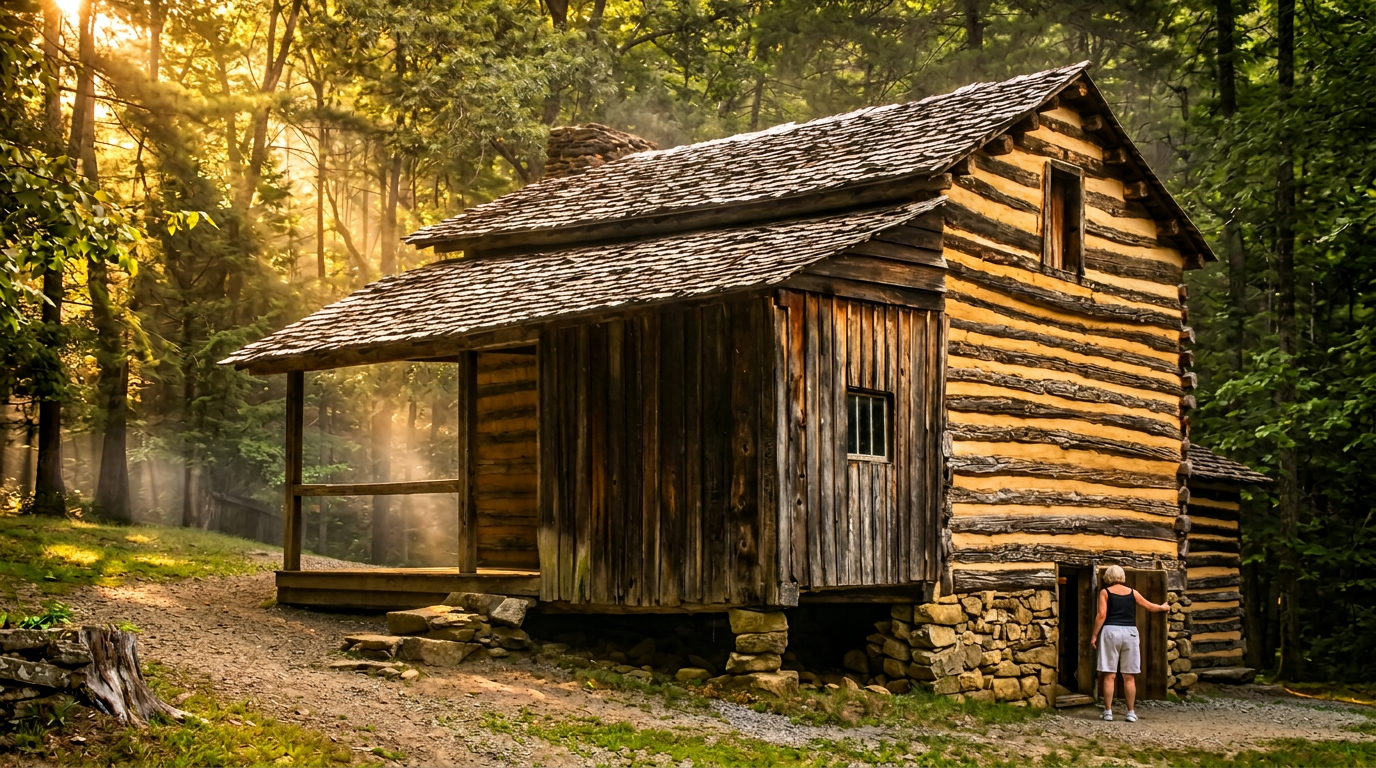
Elijah Oliver Place
Cades Cove · built 1866
The Elijah Oliver Place is the most complete homestead you reach on foot in Cades Cove, a short walk from the loop to a house, springhouse, smokehouse and barn built by a son of the cove's first settlers.
-
 4
Becky Cable House
Cades Cove · built 1879
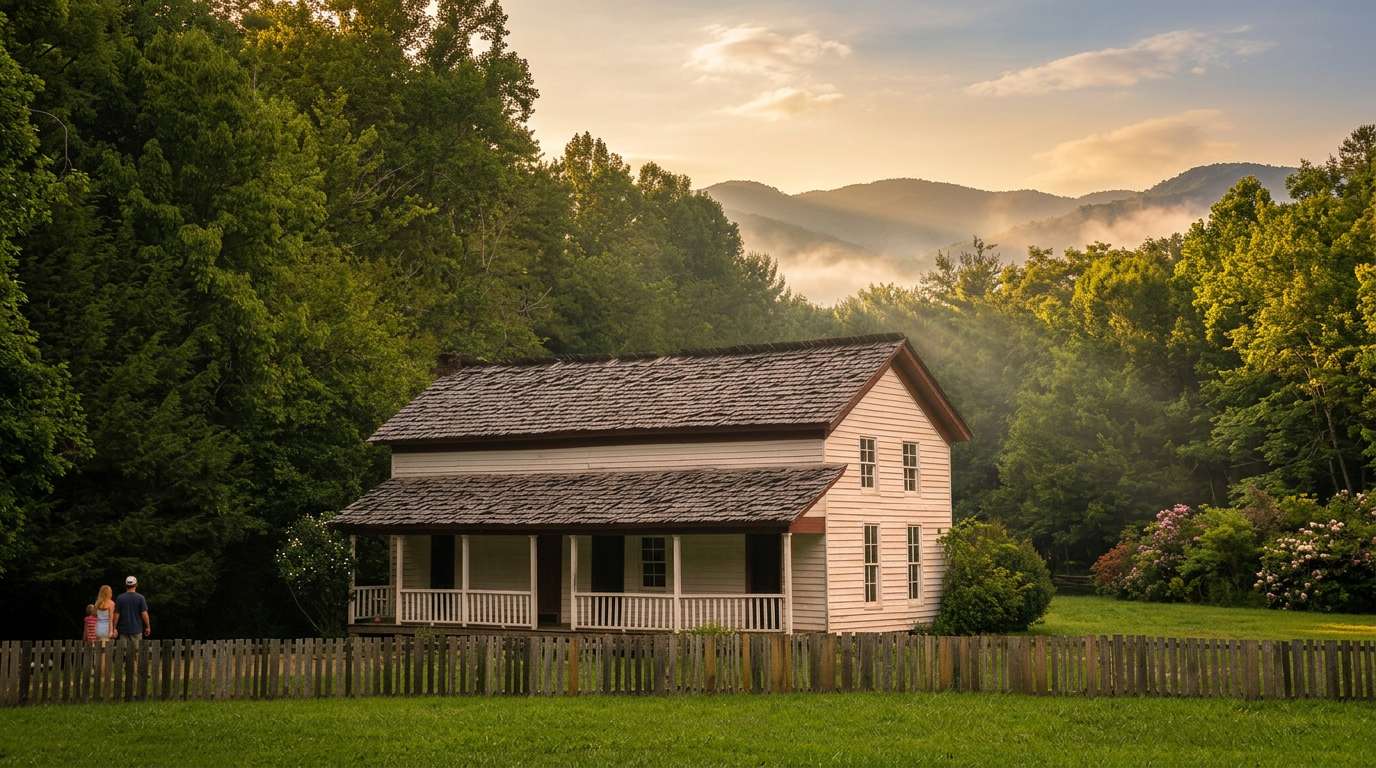
The Becky Cable House is a frame farmhouse beside Cable Mill in Cades Cove, where Rebecca Cable lived for decades and ran a small store, a short walk from the visitor center.
-
 5
Noah "Bud" Ogle Place
Roaring Fork Motor Nature Trail · built 1880
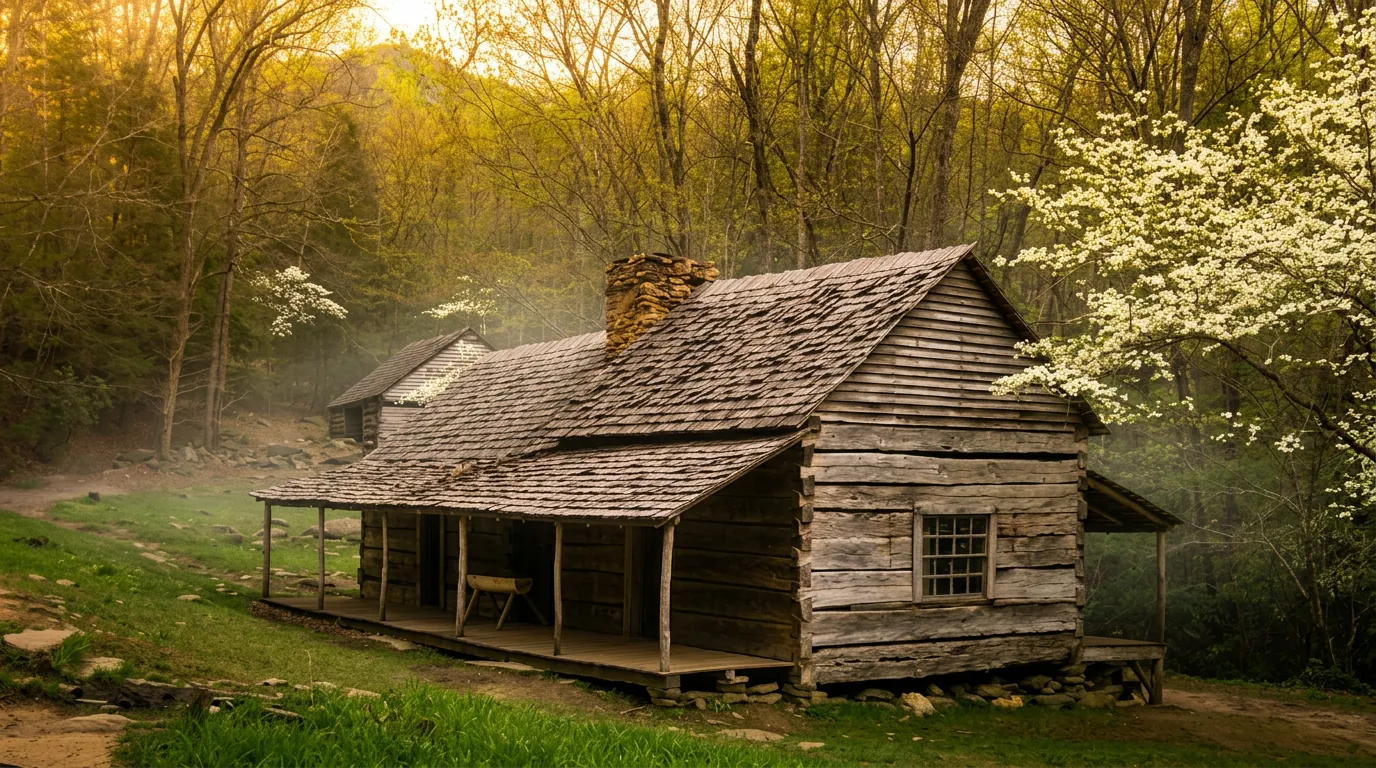
The Noah "Bud" Ogle Place is a log farmstead with a barn and a tub mill, reached by a short self-guiding nature trail just before the Roaring Fork loop begins, and it is the best first stop.
-
 6
Little Greenbrier School
Little Greenbrier · built 1881
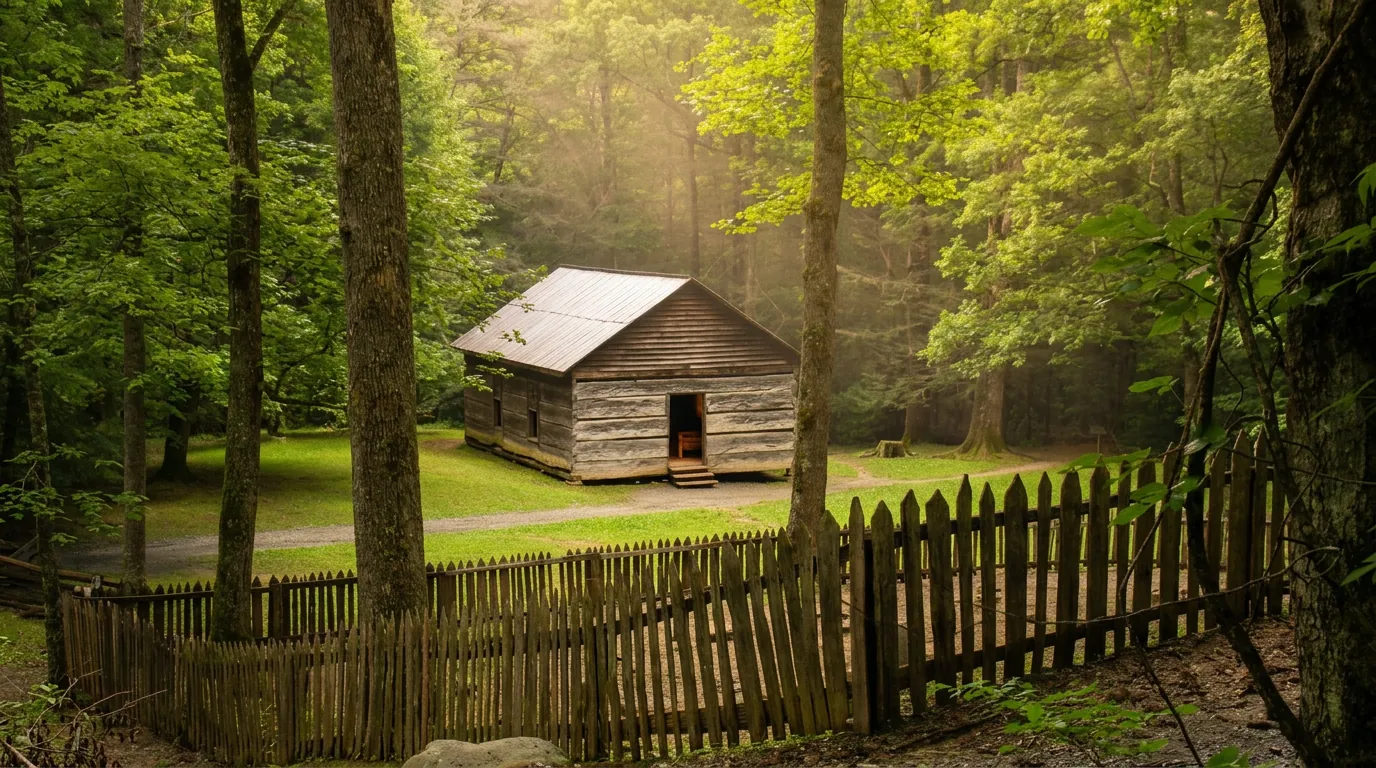
The Little Greenbrier School, built in 1881 and used as a Primitive Baptist church until 1925, is a one-room log building reached by a half-mile walk from Metcalf Bottoms.
-
 7
Mingus Mill (Closed)
Oconaluftee · built 1886
Mingus Mill, an 1886 turbine-powered gristmill about two miles north of Cherokee on US-441, is closed until further notice for preservation work, but the creekside grounds are a short drive from the visitor center.
-
 8
Cades Cove Primitive Baptist Church
Cades Cove · built 1887
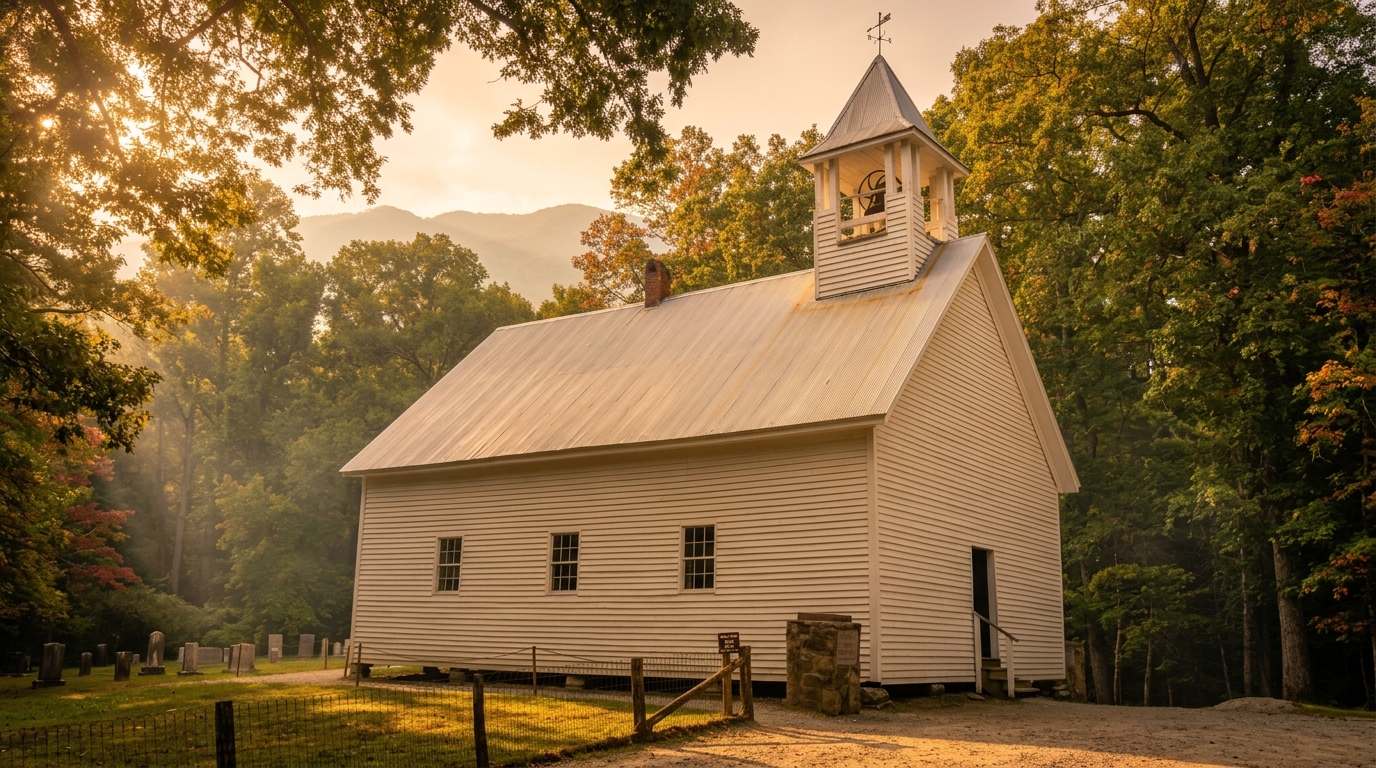
The Primitive Baptist Church, organized in 1827 and rebuilt in 1887, is the oldest congregation in Cades Cove, set in a clearing with a graveyard of the cove's first families.
-
 9
Palmer Chapel
Cataloochee Valley · built 1898
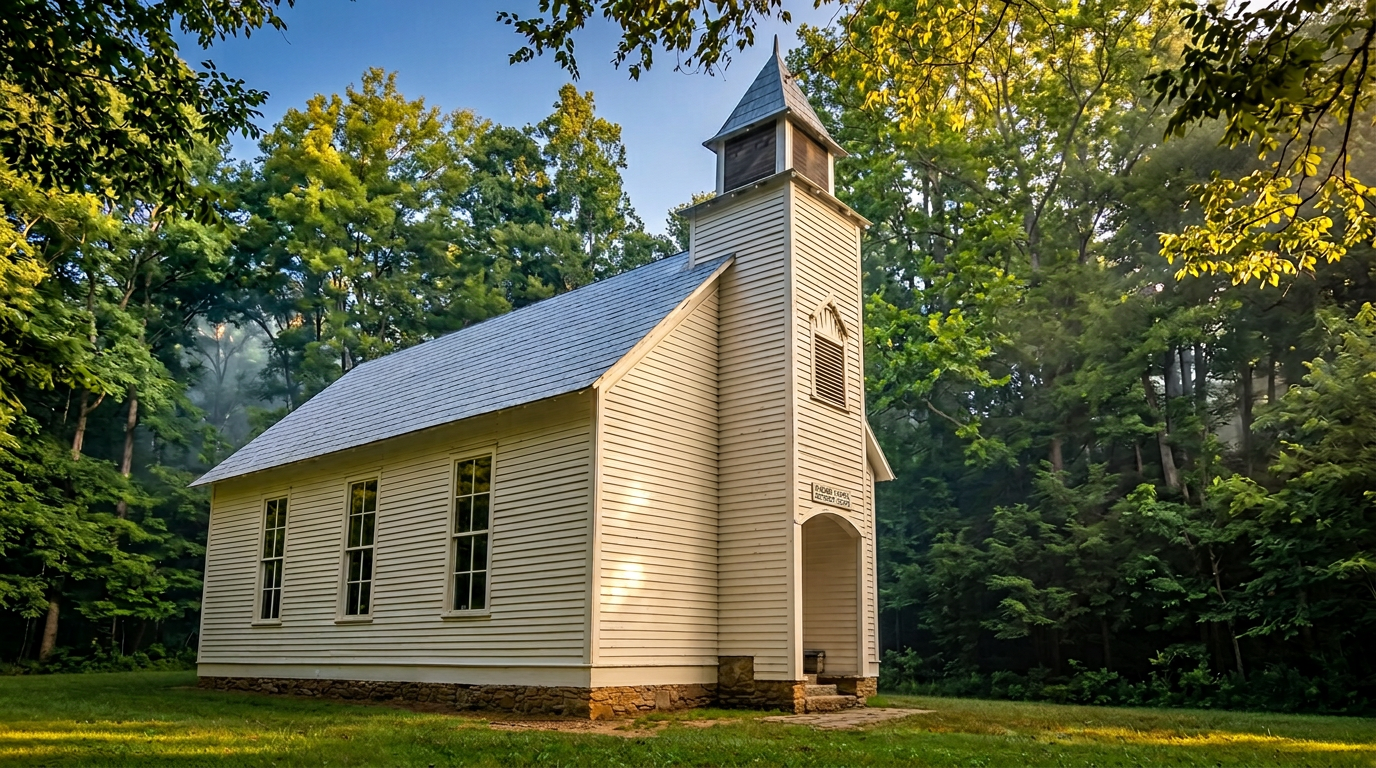
Palmer Chapel, a white frame Methodist church from 1898, is the most photographed building in Cataloochee Valley, set in a meadow where elk often graze.
-
 10
Davis House (Mountain Farm Museum)
Oconaluftee (Mountain Farm Museum) · built 1900
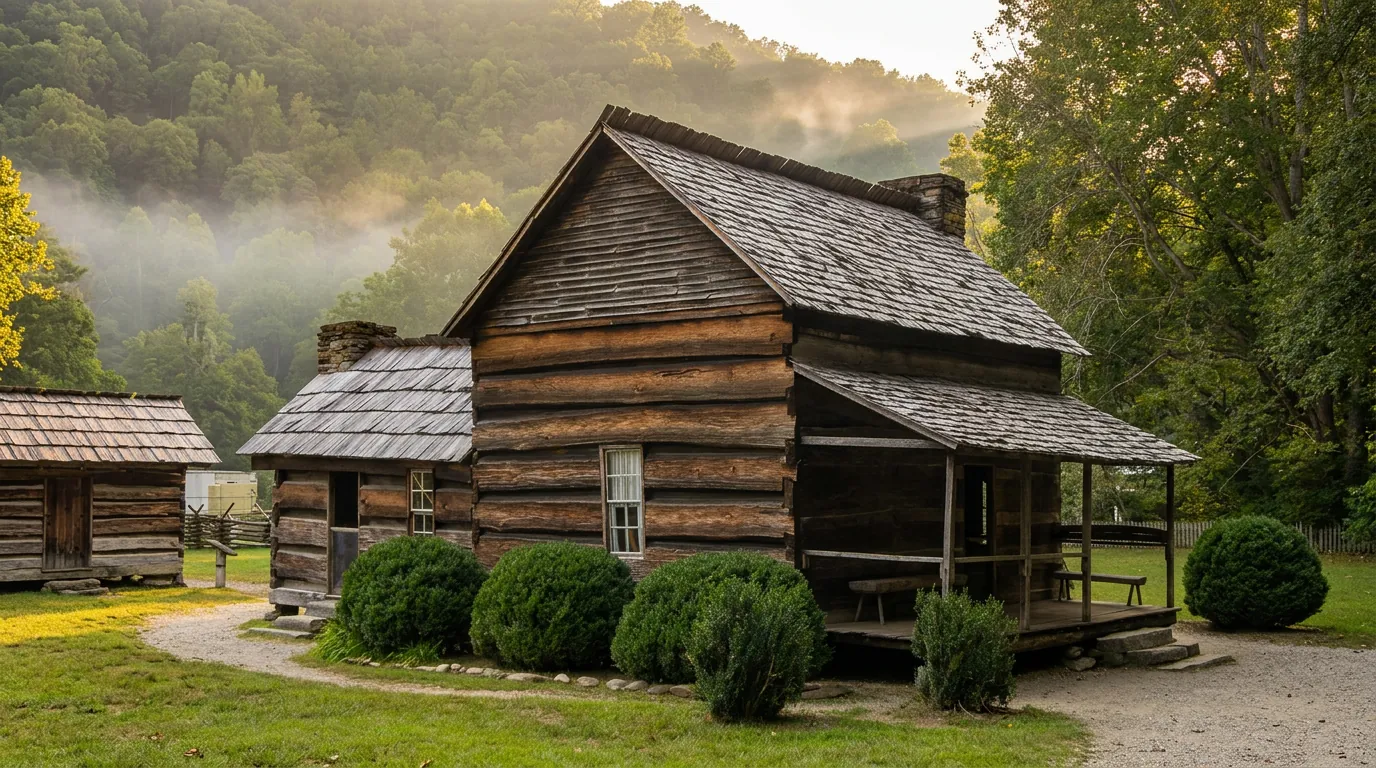
The Davis House is the centerpiece of the Mountain Farm Museum beside the Oconaluftee Visitor Center, a house from around 1900 surrounded by the barn, springhouse, cribs and gardens of a working farm.
-
 11
Beech Grove School
Cataloochee Valley · built 1901
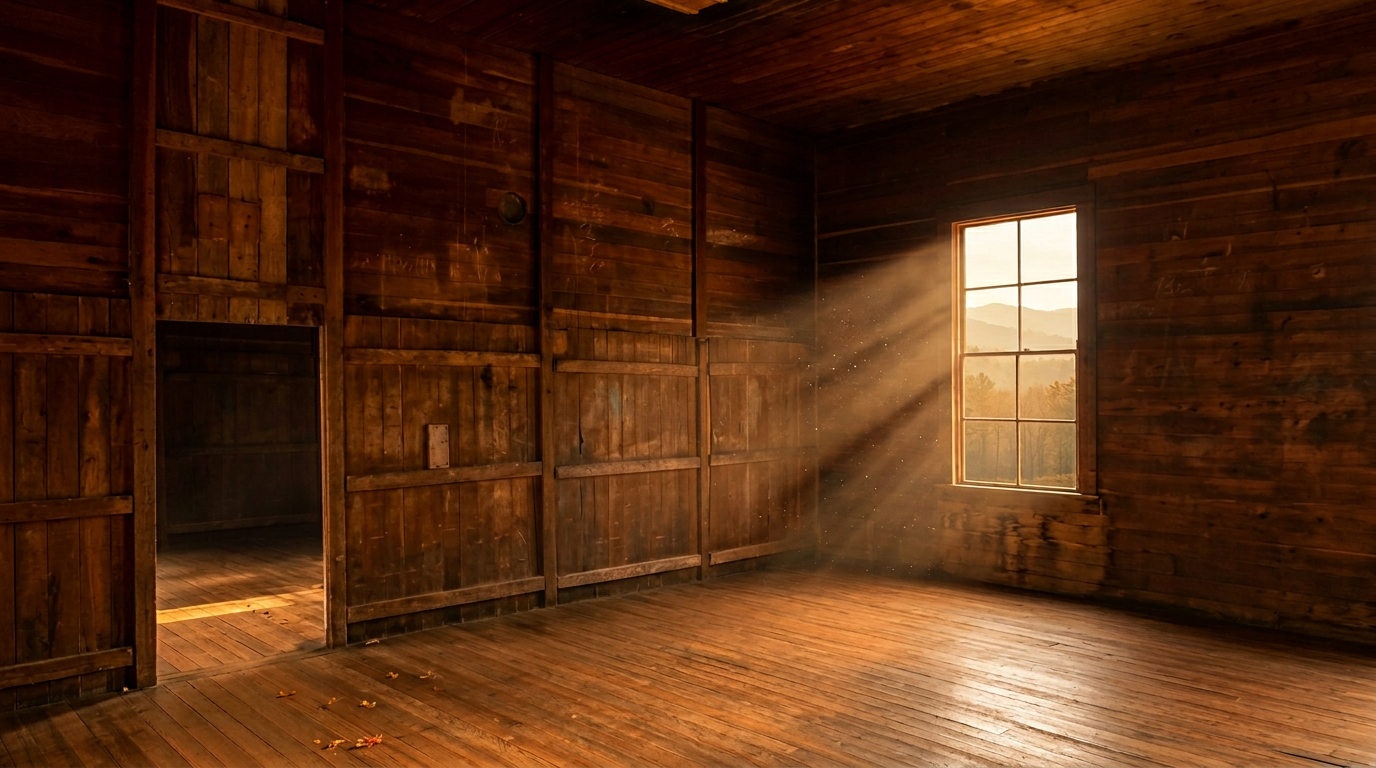
Beech Grove School in Cataloochee Valley is a one-room schoolhouse from 1901, set beside the valley road and open to look inside, a quiet stop on the gravel drive in from Maggie Valley.
-
 12
Cades Cove Methodist Church
Cades Cove · built 1902
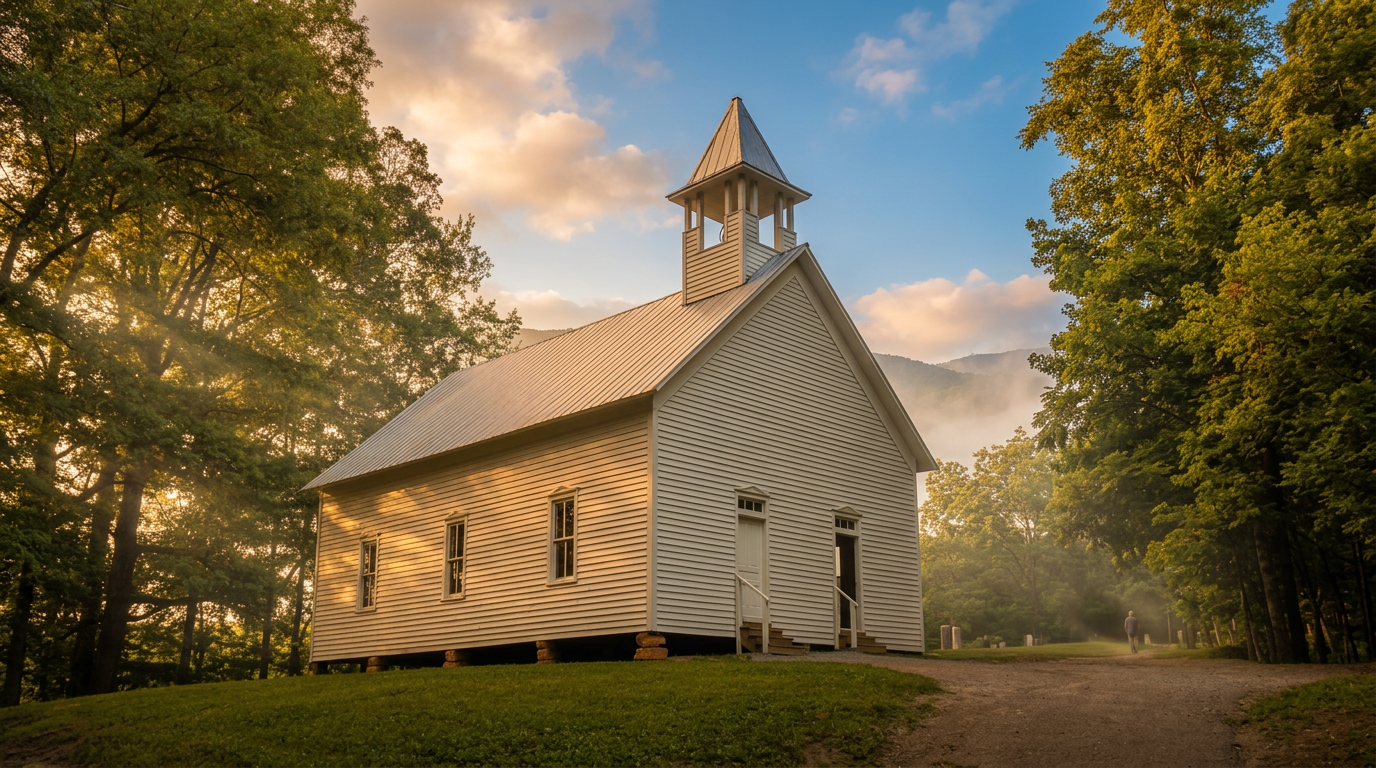
The Cades Cove Methodist Church, a small white frame building from 1902 with a cemetery beside it, is the loop's most familiar-looking church and a short walk from the pull-off.
- 13
Appalachian Clubhouse (Elkmont)
Elkmont · built 1910
The Appalachian Clubhouse at Elkmont was the social hub of a Knoxville summer colony, and the Park Service rehabilitated it in 2010 for day use by reservation, with the old cabins around it preserved.
- 14
Wonderland Hotel Site (Elkmont)
Elkmont · built 1912
The Wonderland Hotel site at Elkmont, where a 1912 resort hotel once stood, now holds foundations, chimneys and a view into the forest, a short walk from the campground along old railroad and road beds.
-
 15
Cades Cove Missionary Baptist Church
Cades Cove · built 1915
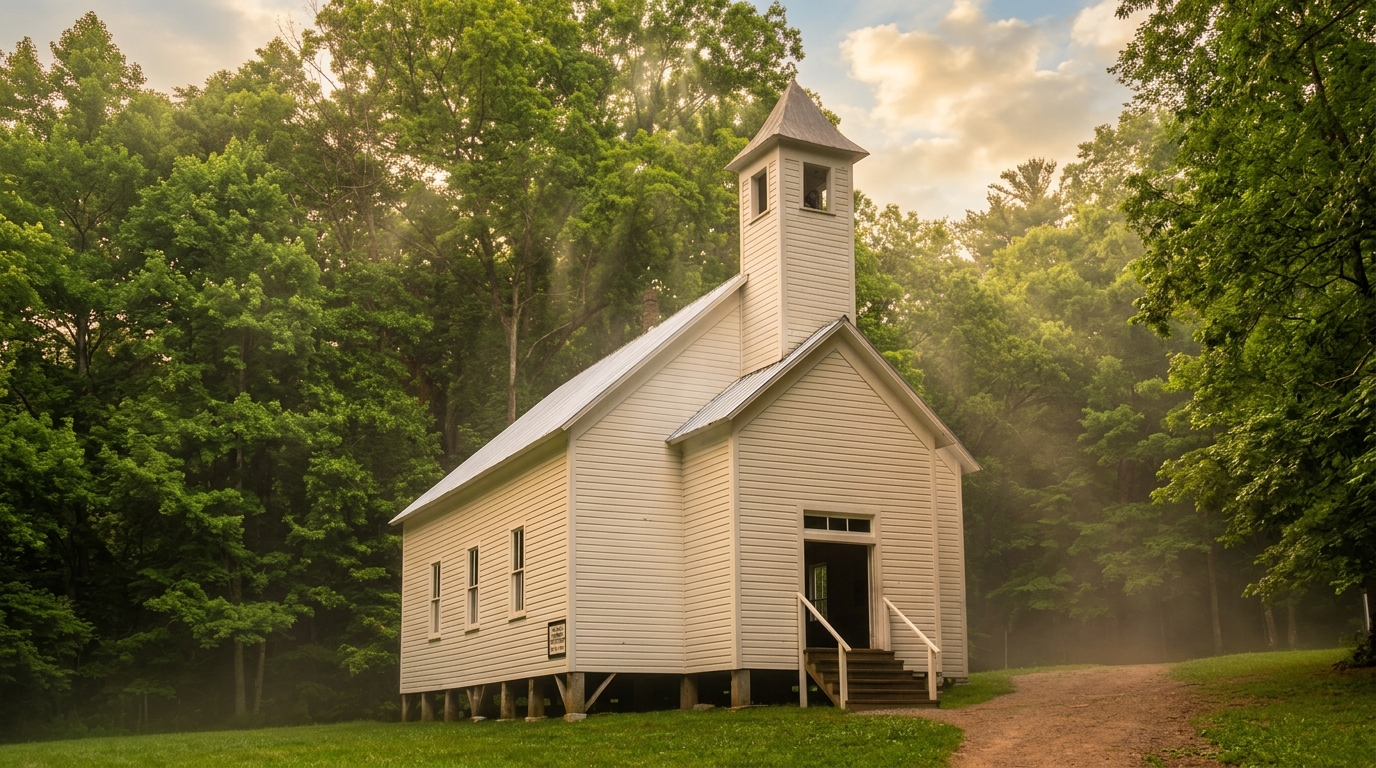
The Cades Cove Missionary Baptist Church is a white frame building from 1915 with a congregation that split from the Primitive Baptists, and it is a short walk from the loop road.
-
 16
Alfred Reagan Place
Roaring Fork Motor Nature Trail
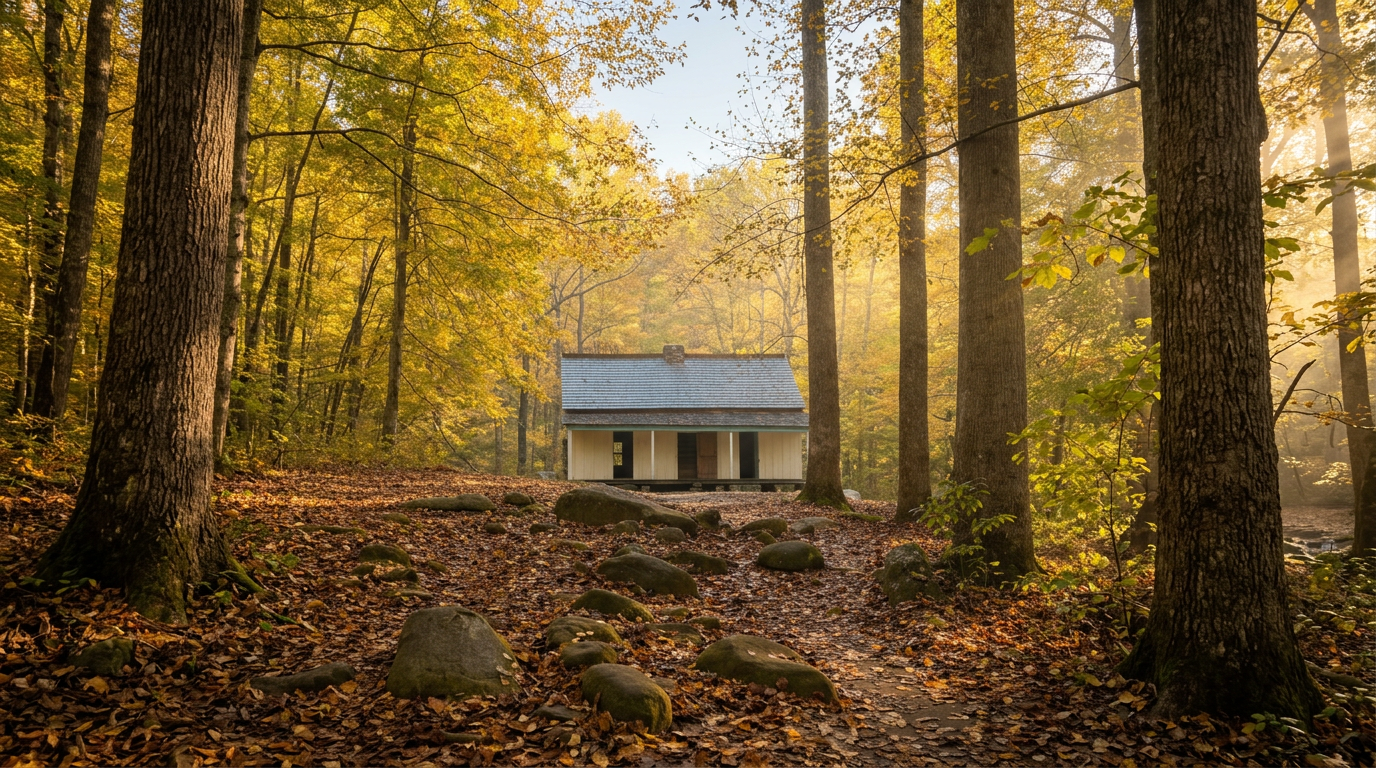
Alfred Reagan's painted frame house and tub mill on the Roaring Fork loop show a more settled side of Smokies farm life than the log cabins, and the stop takes about 20 minutes.
Good to know
Best Historic Sites in the Smokies: FAQ
Do you need a reservation to visit these historic sites?
Is Cable Mill actually operational, or just preserved?
Can you visit Cades Cove without a car?
How did all those buildings end up together at the Mountain Farm Museum?
What's the story behind the Walker Sisters Cabin, and why is it different from the others?
Where to stay
Near the historic Smokies
Pick your spots, then lock in where you'll sleep. Compare live cabin, hotel, and rental prices nearby across Booking.com, Vrbo, and Expedia.
Map powered by Stay22, with live prices from booking sites. If you book through it, Mountain Insider may earn a commission at no extra cost to you. How we make money.
Keep exploring